SCOPE OF TESTING
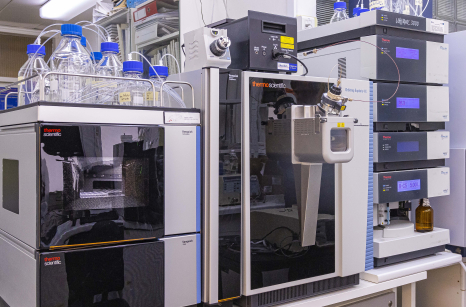
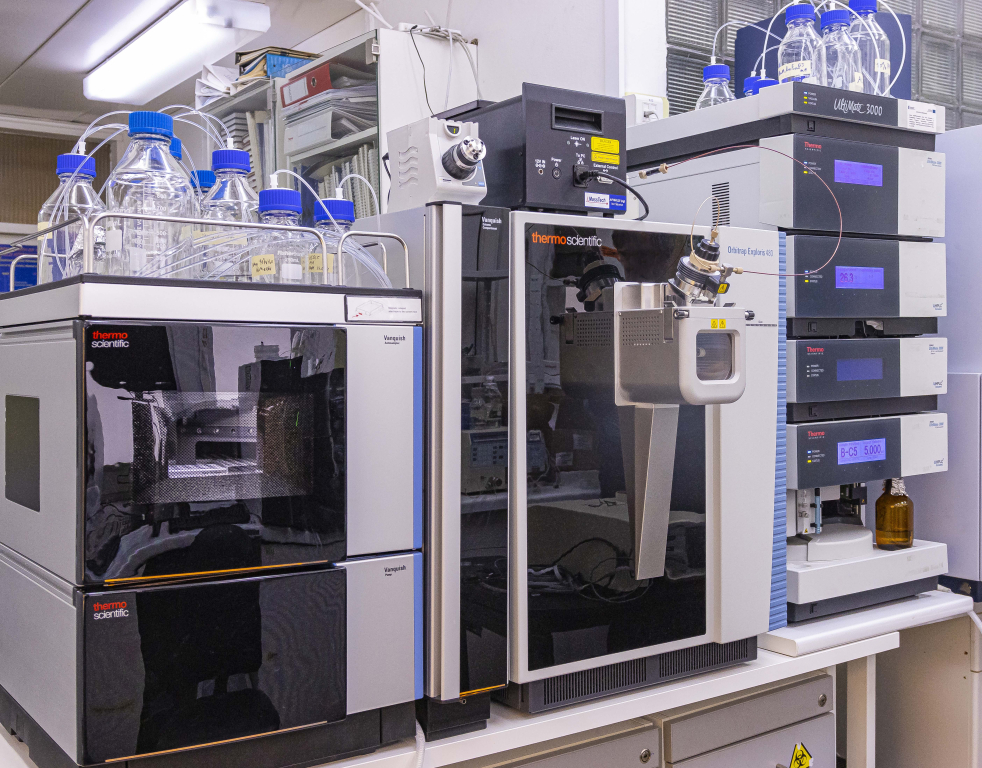
Combining liquid chromatography with a quadrupole mass spectrometer maximizes the efficiency of small molecule identification, proteomic and metabolomic analyses. LC-MS provides the accuracy and selectivity to produce quantifiable data.
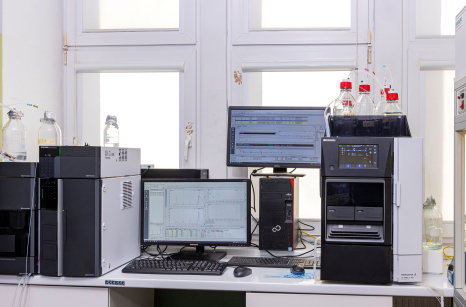
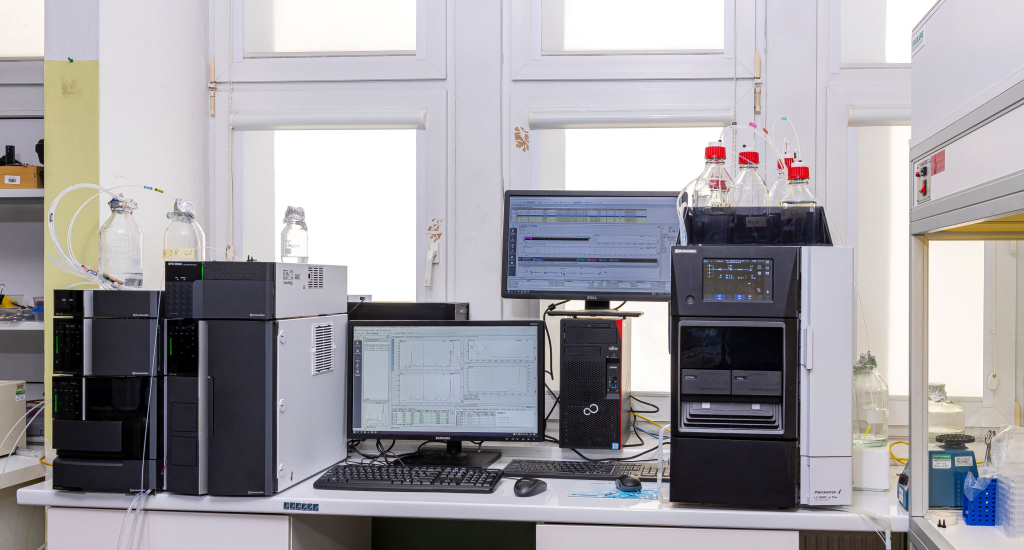
The LABO Analytical Laboratory makes extensive use of the high-performance liquid chromatography technique. The instruments that the laboratory is equipped with guarantee high sensitivity of analysis and allow for accuracy of compound identification from the obtained spectrum.
With both LC-MS and high-performance liquid chromatography, it is possible to determine:
- The profile of amino acids and their derivatives (including tryptophan, arginine, citrulline, asymmetric dimethylarginine, monomethylarginine)
- The profile of nicotinamide metabolites (nicotinamide, methyl-NA, NAD+, nicotinic acid, nicotinamide riboside)
- The profile of nucleotide metabolites (ATP, ADP, AMP, GTP, GDP, GMP, IMP, inosine, adenosine, xanthine, uric acid, NAD, NADH)
- The profile of angiotensin peptides (Ang (1-7), Ang I, Ang II, Ang III, Ang (1-9))
- The profile of ecto-enzymes of plasma nucleotide metabolism (ecto-5’-nucleotidase, adenosine deaminase and others).
XL-180 automatic biochemical analyzer with open system, is intended for spectrophotometric and immunoturbidimetric measurements (in the wavelength range of 340-700 nm). The analyzer has an extensive test menu for biochemical determinations in blood serum, plasma and urine. The device has an extensive quality control program, and allows for up to 180 tests per hour (without ISE) The small volume of reaction mixture (180 µL) dispensed with a precision sapphire syringe allows for using small amounts of biological material obtained intraoperatively from patients or small laboratory animals.
With the XL-180, it is possible to:
- Analyze biochemical parameters (including hsCRP, AST, ALT, LDH, creatinine, albumin, CK-MB, CK, LDL, HDL) using a small amount of serum/plasma (< 50 µL).
On the other hand, LABO’s Microscopy and Cell Culture Laboratory offers experimental models for in vitro tests of human disease mechanisms and for testing new therapies.
Cell cultures, including:
- Vascular endothelial cells (primary: HAEC, HCAEC, VEC, LEC, cellular lines: HMEC-1, H5V, HUVEC, PIEC, among others)
- Smooth muscle cells (primary VSMCs)
- Interstitial cells of the aortic valve (primary VIC)
- Cardiomyocytes (cell lines: H9c2, AC16, HL-1)
- Inflammatory cells (THP-1, HL-60, Jurkat cell lines)
- Cancer cells (MCF-1, MDA-MB-231, E0771, 4T1, PANC-1).
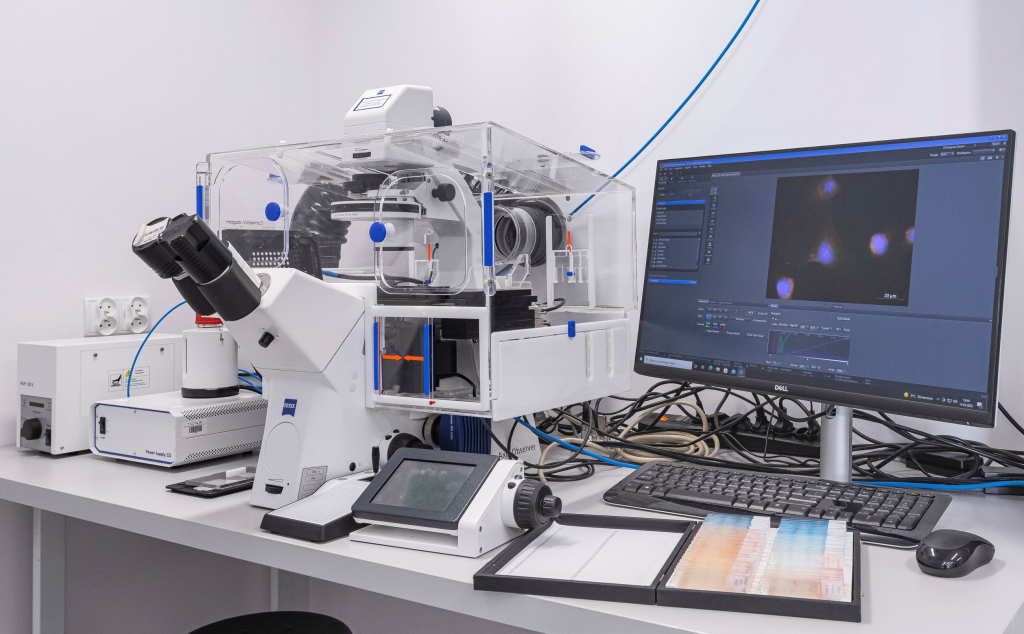
The laboratory is equipped with an AxioObserver 7 FL inverted fluorescence microscope with an automated system for making optical cross sections using structured light allows for live observations of cells under normoxia and hypoxia. The microscope is equipped with two cameras. The Axiocam 503 monochrome 3-megapixel camera features exceptional sensitivity, which is important for low-light and live imaging. The high sensitivity allows the use of short exposure times, even with weak fluorescent markers, which prevents damage to samples. The microscope also allows observation of histological preparations under transmitted light. Second ultra-fast 5-megapixel color camera, Axiocam 305, uses CMOS Global Shutter technology, which allows imaging in the high resolution at high speeds. This gives up to 36 frames per second at full resolution. The microscope has a system for quick replacement and individual configuration of up to 64 fluorescent filters. In addition, the microscope is equipped with Nomarski contrast. It is a microscopic technique that involves splitting light polarized through a prism into two beams, normal and time-delayed, resulting in a quasi-spatial image.
With AxioObserver 7 FL, the following is possible:
- imaging of cellular structures
- survival and automated measurements of proliferation and migration in cell cultures
- permeability and invasion, proliferation tests
- analysis of cell adhesion processes
- tracking the movement of intracellular and extracellular proteins, analysis of their externalization to the surface of the cell membrane
- assessment of cell viability and overall condition
- assessment of cellular functionality, such as analysis of nitric oxide production by vascular endothelium, analysis of myocyte contractility by assessing intracellular calcium levels
- analysis of histological preparations
In addition, the Laboratory has two laminar chambers and 3 culture incubators, which provide a wide range of research capabilities and a high throughput of research. In addition, the research uses advanced cell co-culture models, as well as systems for mechanical cell stimulation and the Seahorse XFp system.
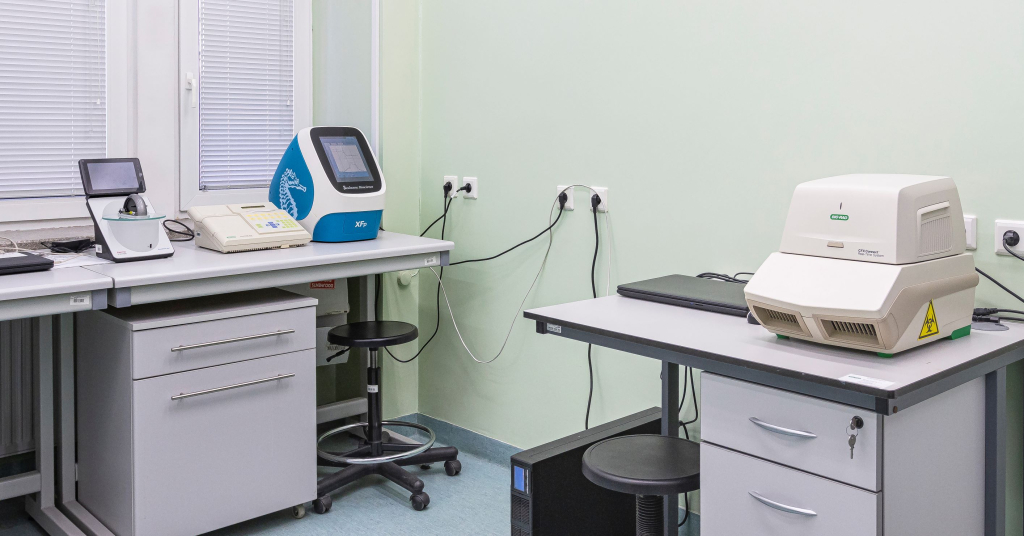
The Seahorse XFp system is an extracellular flux analyzer that is the Gold Standard in the study of cell metabolism. The system allows a real-time “stress test” of the two main energy production pathways of glycolysis and mitochondrial cellular respiration. The Seahorse XFp analyzer allows the study of mammalian cells, yeast, isolated mitochondria or plant cells.
With Seahorse XFp, the following is possible:
- taking measurements of cellular metabolism
detecting key changes in cellular metabolism
survival and automatic measurement of mitochondrial respiration and glycolysis in real time,
performing analyses of eukaryotic cells and mitochondria derived froma broad spectrum of tissues
working with small amounts of cells (from 5×10³ up to 2×10⁵) and mitochondria (1-5 µg)
assessment of mitochondrial function, respiratory substrate consumption and overall cell health.
RESEARCH TEAM
The research team includes:
Employees:
Prof. Ryszard T. Smoleński
Prof. Ewa M. Słomińska
Dr. Habil. Barbara Kutryb-Zając
Marta Tomczyk, Ph.D.
Paulina Mierzejewska, Ph.D.
Magdalena Zabielska-Kaczorowska, Ph.D.
Alicja Braczko, M.Sc.
Patrycja Jabłońska, M.Sc.
Marcin Lipiński, M.Sc.
Krzysztof Urbanowicz, Eng.
Doctoral students:
Ada Kawecka, M.Sc.
Agata Jędrzejewska, M.Sc.
Oliwia Król, M.Sc.
Gabriela Harasim, M.Sc.
Marika Frańczak, M.Sc.
PUBLICATIONS
Many publications have been developed based on the results of the research obtained by using the knowledge, experience of scientists from the Department and its equipment, including.
1. KUTRYB-ZAJĄC BARBARA, Kawecka Ada, CARATIS FIONA~51, URBANOWICZ KRZYSZTOF, BRACZKO ALICJA, Furihata Tomomi, KARASZEWSKI BARTOSZ, SMOLEŃSKI RYSZARD T., RUTKOWSKA ALEKSANDRA. The impaired distribution of adenosine deaminase isoenzymes in multiple sclerosis plasma and cerebrospinal fluid. Front. Mol. Neurosci. 2022 : vol. 15, art. ID 998023, s. 1-13
2. KUTRYB-ZAJĄC BARBARA, Kawecka Ada, BRACZKO ALICJA, Franczak Marika, SŁOMIŃSKA EWA M., Giovannoni Roberto, SMOLEŃSKI RYSZARD T. CoCl2-mimicked endothelial cell hypoxia induces nucleotide depletion and functional impairment that is reversed by nucleotide precursors. Biomedicines 2022: vol. 10, nr 7, art. ID 1540, s. 1-19
3. JABŁOŃSKA PATRYCJA, MIERZEJEWSKA PAULINA, TOMCZYK MARTA, KOSZAŁKA PATRYCJA, FRAŃCZAK MARIKA, Kawecka Ada, KUTRYB-ZAJĄC BARBARA, BRACZKO ALICJA, SMOLEŃSKI RYSZARD T., SŁOMIŃSKA EWA M. Differences in extracellular NAD+ and NMN metabolism on the surface of vascular endothelial cells. Biologym2022: vol. 11, nr 5, art. ID 675, s. 1-12
4. BRACZKO ALICJA, KUTRYB-ZAJĄC BARBARA, JĘDRZEJEWSKA AGATA, KRÓL OLIWIA, MIERZEJEWSKA PAULINA, ZABIELSKA-KACZOROWSKA MAGDALENA, SŁOMIŃSKA EWA M., SMOLEŃSKI RYSZARD T. Cardiac Mitochondria Dysfunction in Dyslipidemic Mice. Int. J. Mol. Sci. 2022 : vol. 23, nr 19, art. ID 11488, s. 1-17
5. JĘDRZEJEWSKA AGATA, KUTRYB-ZAJĄC BARBARA, KRÓL OLIWIA, HARASIM GABRIELA, FRAŃCZAK MARIKA, JABŁOŃSKA PATRYCJA, SŁOMIŃSKA EWA, SMOLEŃSKI RYSZARD TOMASZ. The decreased serum activity of cytosolic 5’-nucleotidase IA as a potential marker of breast cancer-associated muscle inflammation. Nucleos. Nucleot. Nucleic Acids 2022 : vol. 41, nr 3, s. 273-284
6. MIERZEJEWSKA PAULINA, KUNC MICHAŁ, ZABIELSKA-KACZOROWSKA MAGDALENA AGNIESZKA, KUTRYB-ZAJĄC BARBARA, PELIKANT-MAŁECKA IWONA, BRACZKO ALICJA, JABŁOŃSKA PATRYCJA, Romaszko Paweł, KOSZAŁKA PATRYCJA, SZADE JOLANTA, SMOLEŃSKI RYSZARD TOMASZ, SŁOMIŃSKA EWA MARIA. An unusual nicotinamide derivative, 4-pyridone-3-carboxamide ribonucleoside (4PYR), is a novel endothelial toxin and oncometabolite. Exp. Mol. Med. 2021 : vol. 53, nr 9, s. 1402-1412
7. KUTRYB-ZAJĄC BARBARA, HARASIM GABRIELA, JĘDRZEJEWSKA AGATA, KRÓL OLIWIA, BRACZKO ALICJA, JABŁOŃSKA PATRYCJA, MIERZEJEWSKA PAULINA, ZIELIŃSKI JACEK, SŁOMIŃSKA EWA M., SMOLEŃSKI RYSZARD T. Macrophage-derived adenosine deaminase 2 correlates with M2 macrophage phenotype in triple negative breast cancer. Int. J. Mol. Sci. 2021 : vol. 22, nr 7, art. ID 3764
8. JABŁOŃSKA PATRYCJA, KUTRYB-ZAJĄC BARBARA, MIERZEJEWSKA PAULINA, Jasztal Agnieszka, Bocian Barbara, LANGO ROMUALD, ROGOWSKI JAN, Chlopicki Stefan, SMOLEŃSKI RYSZARD T., SŁOMIŃSKA EWA M. The new insight into extracellular NAD+ degradation-the contribution of CD38 and CD73 in calcific aortic valve disease J. Cell. Mol. Med. 2021 : vol. 25, nr 13, s. 58845898
9. Olkowicz Mariola, Czyzynska-Cichon Izabela, SZUPRYCZYŃSKA NATALIA, Kostogrys Renata B., KOCHAN ZDZISŁAW, Debski Janusz, Dadlez Michal, Chlopicki Stefan, SMOLEŃSKI RYSZARD T. Multi-omic signatures of atherogenic dyslipidaemia: pre-clinical target identification and validation in humans J. Transl. Med.2021 : vol. 19, nr 1, art. ID 6, s. 1-23
10. Olkowicz Mariola, TOMCZYK MARTA, Debski Janusz, Tyrankiewicz Urszula, Przyborowski Kamil, BORKOWSKI TOMASZ, ZABIELSKA-KACZOROWSKA MAGDALENA, SZUPRYCZYŃSKA NATALIA, KOCHAN ZDZISŁAW, Smeda Marta, Dadlez Michal, Chlopicki Stefan, SMOLEŃSKI RYSZARD T. Enhanced cardiac hypoxic injury in atherogenic dyslipidaemia results from alterations in the energy metabolism pattern. Metab. Clin. Exp. 2021 : vol. 114, art. 154400
11. TOMCZYK MARTA, Olkowicz Mariola, SŁOMIŃSKA EWA MARIA, SMOLEŃSKI RYSZARD T. High throughput procedure for comparative analysis of in vivo cardiac glucose or amino acids use in cardiovascular pathologies and pharmacological treatments. Metabolites 2021 : vol. 11, nr 8, art. ID 497, s. 1-16
PRICE LIST
The laboratory will perform analyses according to individual orders with adaptation to specific needs of contractors. The cost of the service is priced individually for external customers.
CONTACT
Dr. Habil. Barbara Kutryb-Zając
The Laboratory for Biochemical Analysis and Imaging
Department of Biochemistry
Medical University of Gdańsk
Dębinki 1
80-211 Gdańsk
58 349 14 14
barbara.kutryb-zajac@gumed.edu.pl