

The Centre for Space Biomedicine and Radiological Protection is a University-wide organisational unit of the Medical University of Gdańsk, established to integrate and advance scientific, expert, and implementation activities at the intersection of space biomedicine, radiological protection, and health security technologies. The Centre serves as a platform for interdisciplinary collaboration, bringing together expertise in medical, biological, physical, and engineering sciences in response to contemporary health challenges associated with human functioning in extreme and high-risk environments.
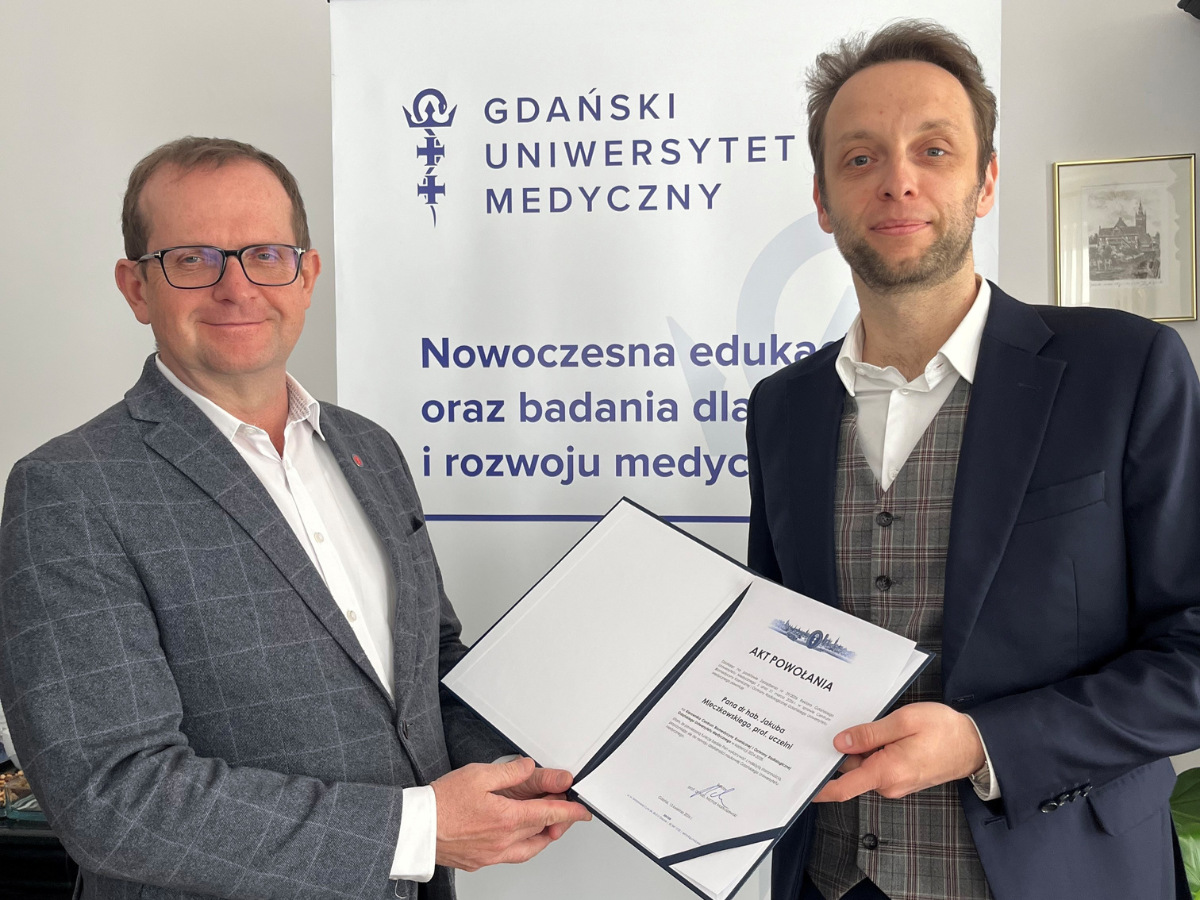
Our aim is to create a collaborative space which integrates molecular biology, clinical medicine, data analysis, and research on the impact of environmental factors on human health, explains Assoc. Prof. Jakub Mieczkowski, Ph.D., D.Sc., Head of the Centre.
The mission of the Centre for Space Biomedicine and Radiological Protection is to conduct scientific research at the highest international level and to translate scientific knowledge into practical solutions supporting the protection of human health, as well as medical and strategic decision-making. The Centre’s activities focus on both fundamental and translational research aimed at safeguarding and maintaining human health in extreme environments, developing advanced methods for assessing and monitoring health risks, and strengthening health security in both civilian and operational contexts.
“We take a broad view of space medicine – as medicine of limited resources and increased risk – which finds applications not only in space but also in aviation and other extreme environments. At the same time, it is important to emphasise that space activity is no longer merely a vision of the future; it is a rapidly evolving reality. Microgravity enables research that is difficult or impossible to conduct on Earth, such as the growth of high-quality protein crystals used in drug design or the development of advanced bioprinting technologies. This opens up new directions for biomedical research and applications,” adds Prof. Mieczkowski.
The Centre’s research activities encompass, in particular, the study of environmental and operational factors characteristic of extreme and high-risk settings, including ionising radiation, altered pressure conditions, isolation, and other factors affecting human health.
“From a regional perspective, the Centre’s activities also align with the development of nuclear energy in northern Poland. We see a clear need to build competencies in radiological protection, monitoring the biological effects of exposure, and developing systems that support health security. Our goal is to advance applied research addressing real-world challenges—not only in the space sector, but also in energy and medicine,” notes Prof. Mieczkowski.
In pursuing its mission, the Centre coordinates interdisciplinary research projects within the Medical University of Gdańsk and in collaboration with national and international partners, thereby enhancing the competitiveness of research teams in
funding programmes for science and innovation. The Centre supports the development and implementation of innovative diagnostic, prognostic, and analytical solutions, provides expert services, and conducts commissioned research for public institutions and external partners.
A key element of its activity is participation in research consortia and strategic initiatives, as well as the development and transfer of intellectual property. The Centre is also engaged in educational and training activities, including support for doctoral education, postgraduate training, and student-led scientific initiatives.
From the outset, the Centre has had a distinctly collaborative and application-oriented character. It is being developed through cooperation between researchers and clinicians representing complementary areas of expertise – from hyperbaric and extreme environment medicine, developed among others by Prof. Jacek Kot, through physiology and metabolic adaptation associated with Prof. Jędrzej Antosiewicz, to nuclear medicine, medical physics, and clinical imaging, represented by experts such as Wojciech Cytawa, M.D., Ph.D., D.Sc. and Prof. Edyta Szurowska, Chair of the Centre’s Scientific Council. This allows us to develop solutions that are not only scientifically robust but also operationally relevant – in radiological protection, space medicine, dual-use projects, and collaboration with public and industry partners, concludes Prof. Jakub Mieczkowski.


