

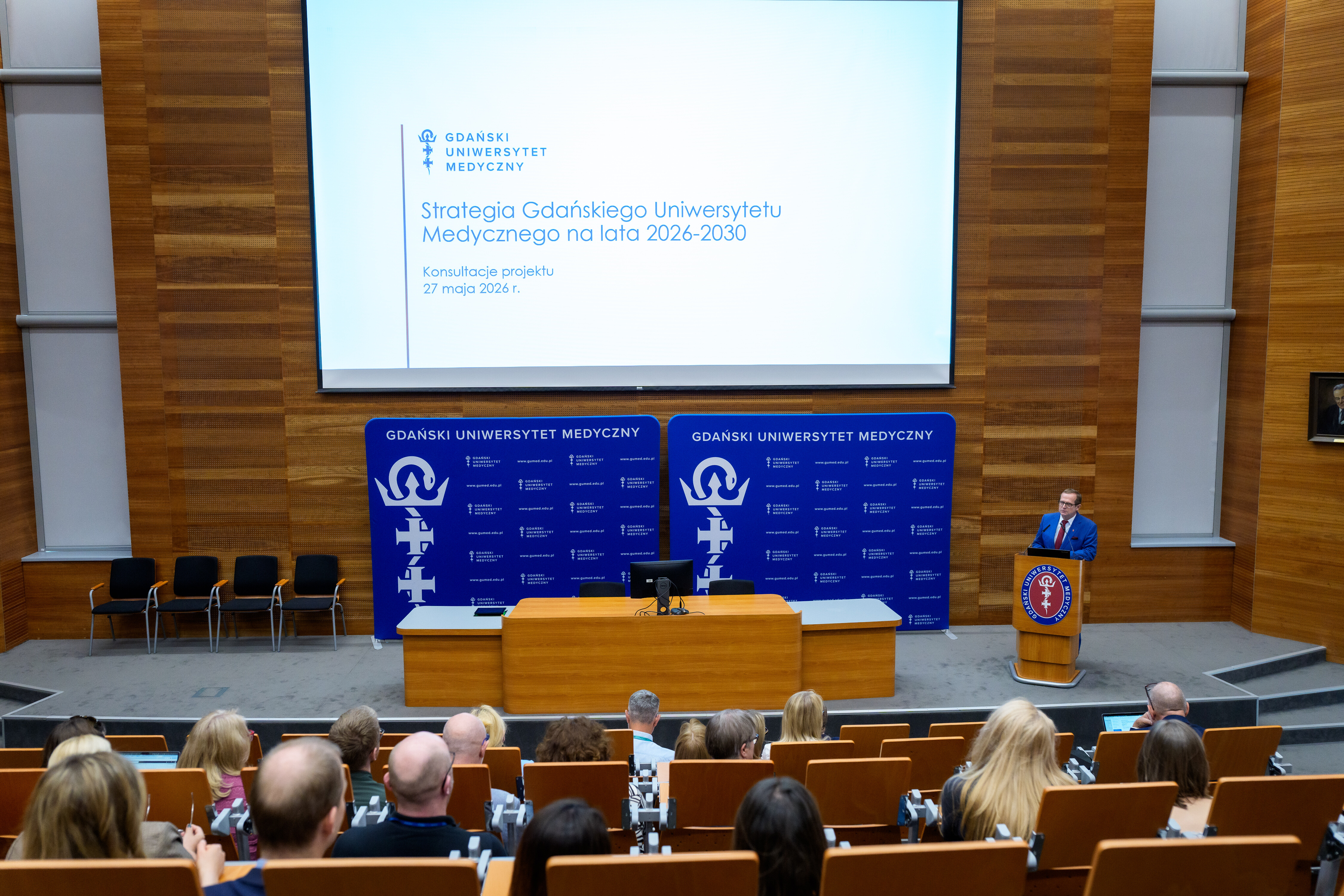
The Senate of the Medical University of Gdańsk has adopted the University Strategy for 2026–2030. The resolution was preceded by a positive opinion from the University Council and community consultations.
The MUG Strategy for 2026–2030 comprises four strategic objectives, fourteen operational objectives and forty-nine strategic initiatives. The proposed actions cover all key areas of the University’s activity, enabling its comprehensive and sustainable development. The document will serve as a roadmap for the academic community in the years ahead.
The Strategy is the result of several months of work by a group of more than 120 University employees and field experts representing the University of Gdańsk.
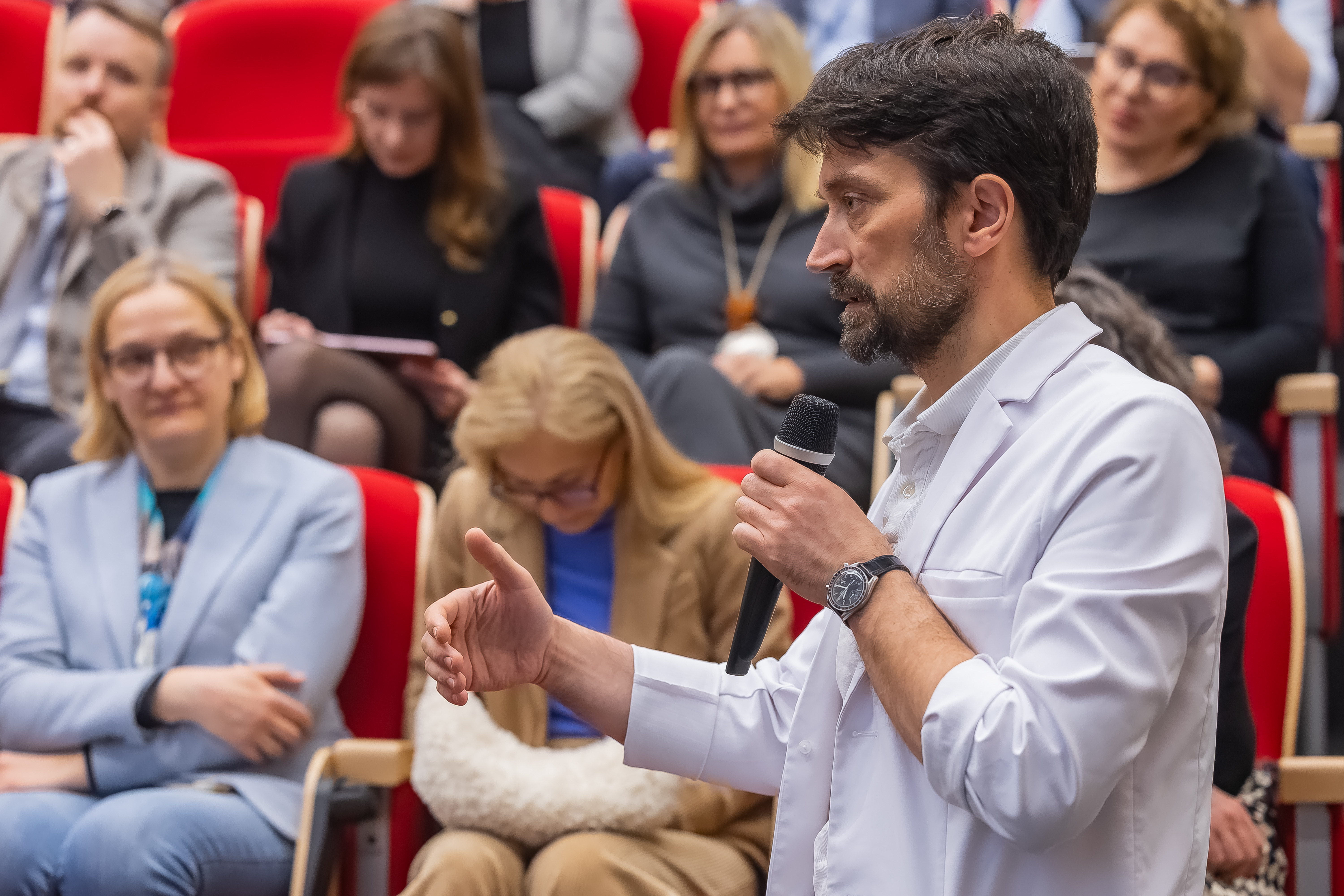
The process of developing the Strategy of the Medical University of Gdańsk was based on methodological assumptions derived from the Balanced Scorecard concept developed by David Norton and Robert Kaplan. In order to ensure a high level of operationalisation of the MUG Strategy for 2026–2030, including its measurement, effective ownership supervision and the possibility of cyclical reviews of the strategic package during the period of its implementation, the Strategy has been fully digitised.
The starting point for the development of the new MUG Strategy is the mission and vision, which set out how we envisage the future of our University. The 2030 Mission was developed in direct reference to the mission in force in 2019–2025 and reads: We create the future of medicine, caring for the health of generations. It emphasises the shared nature of our actions, our concern for people and the fundamental values that have accompanied our University’s activity for generations.
We are entering a period of important challenges. Expectations towards higher education, science and the healthcare system are changing. The importance of interdisciplinarity, internationalisation, research quality, the practical dimension of education, and the efficient and welcoming functioning of institutions is increasing. In this environment, our University seeks not only to respond to ongoing changes, but also to actively co-create them, with students, doctoral candidates, employees, patients, partners and society as a whole in mind, says Prof. Michał Markuszewski, Rector of the MUG. The greatest strength of the University is its community. It is formed by those who teach, study, conduct research, support administrative and organisational processes, and develop clinical, national and international cooperation. Each of these roles is important. That is why one of the key objectives of the Strategy is to build an environment in which we inspire one another, cooperate and support each other’s development. This also applies to the local academic environment united within the Daniel Fahrenheit Association of Universities, as well as to international cooperation, including within the ACE²-EU European Universities Alliance.
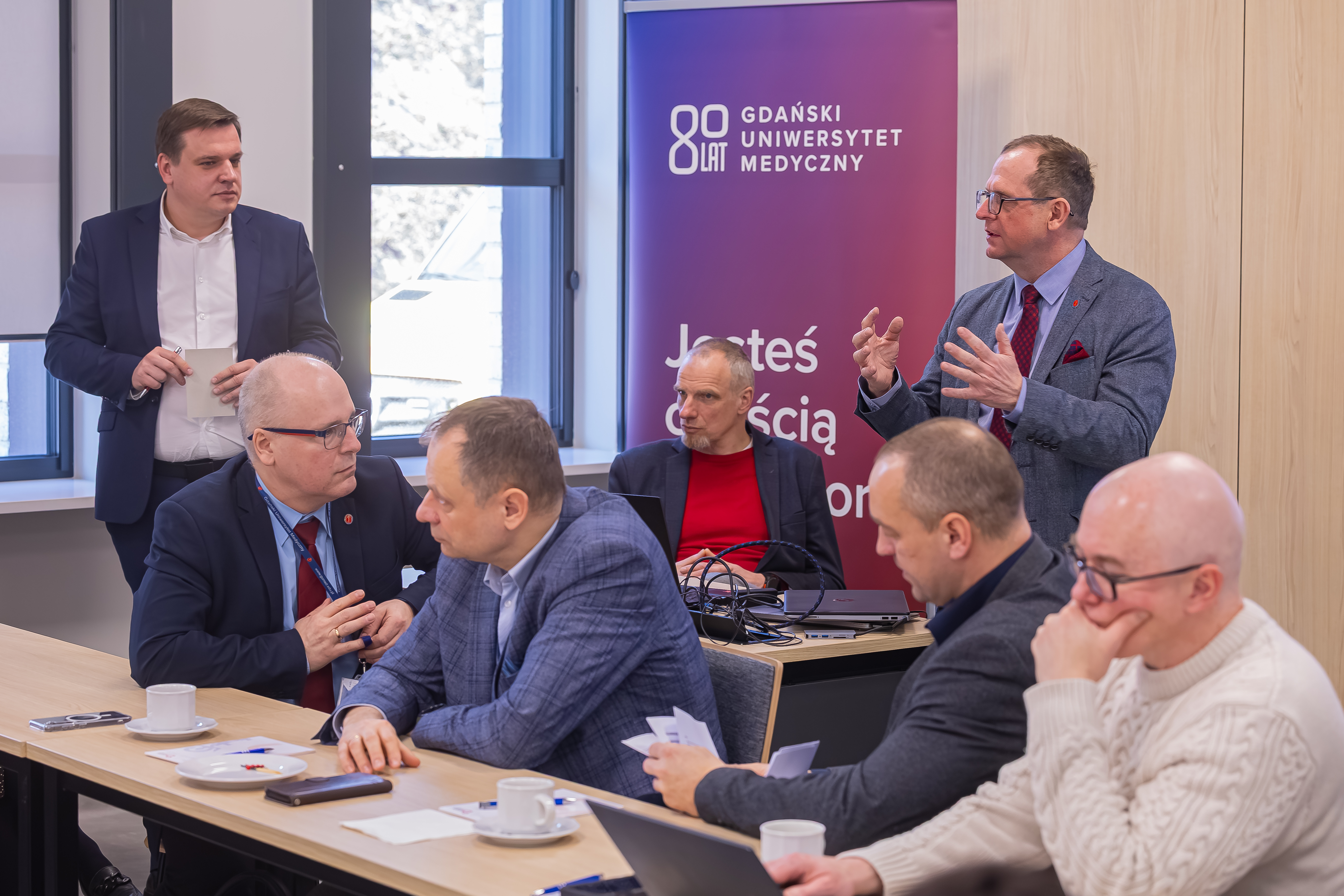
A special place in the 2026–2030 Strategy is dedicated to the quality of education. It will be developed by supporting a professional and engaged teaching staff, modernising study programmes, and taking into account the latest knowledge, teaching methods and the needs of the healthcare system, including emergency and disaster medicine. Equally important is the involvement of students, doctoral candidates and alumni, whose voice, experiences and aspirations constitute an important point of reference for the University’s further improvement.
We want to educate medical professionals prepared to act in a knowledge-based society – people who are competent, responsible, open and aware of the significance of their work, adds the Rector.
The second pillar of the MUG’s development is science. The University’s research development will be supported, among other things, by the advancement of leading scientific areas, the creation of new forms of support for researchers, and the shared use of research infrastructure within core facilities. This means both ensuring appropriate conditions for conducting research and taking action to diversify sources of funding, develop projects of high cognitive and practical significance, and professionalise non-commercial clinical trials. Strong science is the foundation of high-quality teaching, innovative medicine and the University’s responsible impact on its environment.

The Strategy for 2026–2030 also emphasises the need to further strengthen the University’s role in the clinical, socio-economic and international environments. Cooperation with MUG’s healthcare entities will be developed, relations with social and economic partners will be intensified, and the University’s presence in the international academic space will be further consolidated. MUG’s participation in the structures of the ACE²-EU European University Alliance, as well as the deepening of cooperation within the Fahrenheit Universities, are intended to ensure the optimal use of the University’s intellectual and infrastructural potential.
The development of the University itself is also of key importance. A modern higher education institution is defined not only by ambitious scientific and educational objectives, but also by efficient processes, transparent rules, safe working and learning conditions, and infrastructure that responds to the real needs of the academic community. We will improve human capital management, strengthen a culture of engagement, develop internal governance, and modernise the University’s spaces with a view to accessibility, greater functionality and safety across all key areas.
As Rector, I perceive this Strategy as a commitment, concludes Prof. Michał Markuszewski, Rector of the MUG. Its implementation requires consistency, responsibility and cooperation, but also attentiveness to the needs of the people who create the University every day. I would like the years 2026–2030 to be a time of development pursued in a wise, open and sustainable manner – so as to strengthen the potential of our community and build an institution of which we can be proud.
Members of the University community are invited to read the full Strategy in the Extranet.


