Dębinki 7
80-952 Gdańsk
(+48) 58 727 05 05
Dębinki 7
80-952 Gdańsk
(+48) 537 940 193
(+48) 58 349 16 08
Aside from fulfilling its teaching and research roles, the Medical University of Gdańsk is the founding body of four health care institutions, including two clinical hospitals: the University Clinical Centre (UCC) and the University Maritime and Tropical Medicine Centre (UMTMC). Both are highly specialised facilities with highest referantiality grade, i.e. offering the highest healthcare level. The MUG’s hospitals guarantee unique (not only in Poland) treatment method including multi-organs transplantations (heart, kidneys, lungs, liver, pancreatic islets, cornea, bone marrow), mechanical trombectomy, oncological radiotherapy and chemotherapy, children and adult hematology, invasive cardiology and electrocardiology, as well as hyperbaric medicine and tropical diseases.
The MUG hospitals are highly-specialized reference centers. In many disciplines, they offer healing possibilities unique on the scale of Northern Poland in the field of e.g. organ transplantation – heart, kidneys, bone marrow, oncological radiotherapy and chemotherapy, child and adult hematology, invasive cardiology and electro-cardiology, organ surgery, hyperbaric medicine, tropical and nuclear medicine. The highly qualified staff with access to state-of-the-art diagnostic and treatment equipment, such as rectangular hyperbaric chamber, magnetic resonance and CT scans, provide a high standard of medical services.
The MUG is constantly modernizing its teaching and clinical infrastructure. The Invasive Medicine Centre was built in 2011, funded by the Polish government (480 million PLN). It is the largest healthcare investment in the Pomeranian region in the last 30 years. This new hospital building consists of several parts which house 12 surgical wards. The Centre’s maximum bedspace is 311 patients. Its roof functions as a helicopter landing pad, which is directly connected with the Emergency Department.
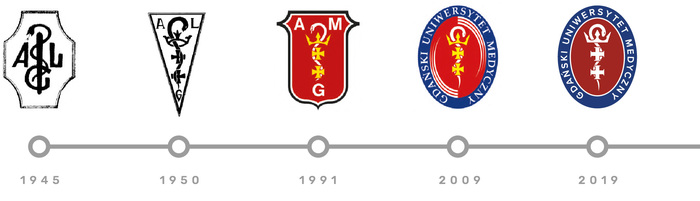
In 2021, the construction of the Non-Invasive Medicine Centre (NIMC), which has a base of nearly 700 beds, was completed. The building has 8 operating rooms equipped with an integrated control system. The combined buildings of the Non-Invasive and Invasive Medicine Centre constitute one of the most modern medical facilities in Europe. There are located i.a.: Department of Cardiology; Department of Mental Diseases and Nervous Disorders; Department of Nephrology, Transplantation and Internal Medicine; Department of Internal Medicine and Connective Tissue Diseases; Department of Adult Neurology, including Stroke Centre; Department of Endocrinology and Internal Medicine; Department of Geriatrics and Department of Obstetrics.
Funding for the construction of the unit came primarily from the state budget, which set aside more than PLN 592 million for this purpose. The cost of construction, including equipment, was approximately PLN 600 million.
Clinical Units
The strength of the Medical University of Gdańsk is its modern research and clinical infrastructure (headed by the University Clinical Centre). The university additionally establishes structures supporting science and knowledge transfer, which are a key element currently building a new quality of science at the Medical University of Gdańsk.
These structures constitute the foundation for the development of science at the Medical University of Gdańsk and are a pillar of activities undertaken by the University as part of the Excellence Initiative – Research University programme with the overarching goal of the program, which is: to improve the quality of scientific activity and the level of education quality, and consequently, raise theinternational significance of the university’s activities.
Centre of Biostatistics and Bioinformatics Analysis
The Centre of Biostatistics and Bioinformatics Analysis offers a wide range of services related to the broadly understood biostatistical and bioinformatic analysis as well as big data analysis. The activity profile includes mainly support for projects based on high-throughput DNA and RNA sequencing (including single cell analysis), as well as other scientific initiatives that require processing of large amounts of data. Additionally, the activities of the Centre will include the use of artificial intelligence in the processing of imaging data and the classification of patient samples. One of the key initiatives of the unit is the Biostatistics Clinic, offering MUG employees and doctoral students the opportunity to discuss the optimal approach to statistical data analysis. The Centre of Biostatistics and Bioinformatics Analysis will provide researchers with professional support at every stage of research, from designing the measurement methodology, through data acquisition and analysis, to the final interpretation.
As part of the Initiative of Excellence – Research University Program at the Medical University of Gdańsk, a new core facility is being created – the Bioanalytical Laboratory, whose main goal will be to cooperate with research teams of the MUG and the UCC by supporting the process of scientific research and clinical trials in the field of analytics and bioanalysis, especially in the context of Priority Areas Research (oncology, cardiology and cardiovascular medicine as well as biochemistry, genetics and molecular biology). The Centre will employ analysts and bioanalysts, whose work will strengthen the interdisciplinary nature of research, development and implementation work carried out at the MUG and will enable the implementation of the above projects by external entities.
Excellence of Scientific Publications Unit
The scientific potential of the Medical University of Gdańsk is over a thousand researchers and over three hundred doctoral students, active in publications fields in the national and international scientific circuit. The Excellence of Scientific Publications Unit was established with a view to them. As part of it, we offer comprehensive support in the field of communication of research results, in particular at various stages of preparation of scientific publications in English.
The activity of ECTC is aimed at conducting clinical research at the early stage of developing innovative therapies, especially in Priority Research Areas of the Medical University of Gdańsk, as defined in the Excellence Initiative – Research University Program. These scientific studies evaluate the safety and efficacy of therapies in numerous therapeutic areas, specifically oncology, hematology, cardiology, neurology and connective tissue diseases. Phase I/II studies at ECTC include first-in-human designs with dose escalation, drug interactions, food interactions, cardiovascular safety, close monitoring of pharmacokinetics/pharmacodynamics, among others.
Translational Brain Diseases Centre
The Translational Brain Diseases Centre of the Fahrenheit Union of Universities is another university-wide unit on the map of initiatives supported under the Excellence Initiative – Research University program. It was established to make the most of MUG’s scientific and research potential in neuroscience.
In order to achieve innovative interdisciplinary projects focused on personalised medicine, MUG has established the Translational Medicine Centre in 2019. Tasks are fulfilled in the Centre through the application of the concept of translational medicine, which is understood as the method of the fast transfer of knowledge gained in an experiment to the daily clinical practice.
Early Clinical Trials Unit (ECTU) is a structure established by MUG in 2019 with direct involvement of UCC. Because of ECTU, it is possible to complete clinical research on innovative drugs.
Clinical Research Support Centre
The objectives of establishing the CRSC in years 2021-2026 are to consolidate activities aimed at developing a path increasing the quality of clinical trials and increasing the availability of patients to new therapies and treatment regimens.
To improve the international status of its research, MUG has intensified an effort on creating Centres of Scientific Excellence in its structures. An example of this activity is the International Research Agenda (IRA) established in 2018. It is a joint intercollegiate unit of MUG and the University of Uppsala, focusing on research on genetic aberrations acquired during a lifetime as a risk factor of cancer and other diseases. This unit was established owing to funds donated by the Foundation for Polish Science within the program of the International Research Agenda (IRA).
Tri-City University Animal House – Research Service Centre
The Tri-City Academic Laboratory Animal Centre is currently one of the most modern facilities of this type in Poland and is an innovative base that allows for world-class research on animals. TAZD – CBU GUMed covers an area of 1100 m2, within which there are two separate passages behind a sanitary and hygienic barrier with 14 rooms for laboratory animals, used for breeding and keeping them, as well as for performing treatments and experimental procedures; quarantine; treatment rooms and utility facilities along with a fully automated washing room and sterilization room.
Interdepartmental Laboratory for In Vivo Research
The unit was established thanks to the initiative of one of the coordinators of Research Team V: In vivo studies on mechanism of disease and therapy in PRA 3, and represents a synergistic collaboration of experienced scientists from the Departments that make up the laboratory. Due to the interdisciplinary nature of the unit, collaboration with the In Vivo Research Laboratory allows for the planning and execution of specialized in vivo studies and analyses from different areas of experimental medicine during a single research project or preclinical trial.
The expanding collections of biological material can pose a challenge for their inventory and management. That is why we offer consulting assistance in matters of freezing mapping as well as organizing and electronic recording of the collected sample collections. An organized electronic sample register will facilitate collection management and enable quick and precise location of each sample by assigning them to a specific position in a box, rack, freezer shelf and freezer.
BioBank of the Department of Laboratory Medical Diagnostics (DLMD) at MUG is a unique structure of highly specialised laboratories with a biorepository adapted to translational research in a large scale. BioBank MUG is a strategic nodal biobank of the Consortium of Polish Biobank Network (PBN) BBMRI.PL, which operates under the patronage of the Ministry of Science and Higher Education. BBMRI.PL is a member of the European Network of Biobanks: Biobanking and BioMolecular Recourses Research Infrastructure (BBMRI-ERIC.EU) – the largest European scientific biomedical organization (European Research Infrastructure Consortium; ERIC).
The intellectual property (IP) policy of MUG focuses on creating and disseminating knowledge and the optimization of benefits from the use of intellectual rights. The essential units at the University in the process of technology transfer and commercialization of intellectual property are the Technology Transfer Office (TTO) and the special purpose company of GUMed, Centre of Medical Innovations Ltd. (CMI Ltd.).

Researchers Support Centre Office
The MUG is an efficient university relying on high organisational culture, supported by modern management methods. One of the assumptions of the “Initiative of Excellence – Research University” Program at the Medical University of Gdańsk is to increase the effectiveness of scientific research by reducing the administrative burden on researchers. The MUG’s unit implementing the assumptions of the IDUB Program in this area is the “Researchers Support Centre” Office, on the basis of which the Centre for Service Excellence will be established in the future.
The Medical University of Gdańsk – as the only medical university in the country – has been selected to the elite group of the top 10 best Polish universities awarded in the prestigious competition of the Ministry of Science and Higher Education Excellence Initiative – Research University.
Learn more about the structures supporting research activity at the Medical University of Gdańsk.
As part of the implementation of the Excellence Initiative – Research University programme, the Medical University of Gdańsk supports the potential of its most distinguished researchers and research teams conducting work in areas recognised as strategic priorities.
Learn more about grant schemes, recruitment initiatives, researcher development programmes, support for publication authors and grant applicants, infrastructure support mechanisms, and educational programmes.
(+48) 58 349 18 61
idub@gumed.edu.pl
Atheneum Gedanense Novum (AGN), r. 212
al. Zwycięstwa 41/42
80-210 Gdańsk
(+48) 505 909 919
olga.hofman@gumed.edu.pl
(+48) 505 901 604
patrycja.maszka@gumed.edu.pl
The HR Strategy for Researchers (HRS4R) exists to support research institutions in implementing the principles of the European Charter for Researchers and the Code of Conduct for the Recruitment of Researchers into their daily practices and internal policies.
The European Charter for Researchers describes the rights and obligations to which researchers and the institutions that employ them are subject, while the Code of Conduct for the Recruitment of Researchers contains rules for the recruitment of researchers that employer institutions should follow to ensure equal treatment for researchers recruited in Europe.
The Medical University of Gdańsk has been awarded the HR Strategy distinction and the HR Excellence in Research symbol. The European Commission certificate was awarded on 30 August 2024.
The implementation of the principles from the Charter and Code by research institutions makes them more attractive to researchers looking for a new employer or host for their research project, and promotes units in national and international grant competitions.
Institutions that effectively implement all the principles of the Charter and the Code are awarded the HR Excellence in Research Award by the European Commission, which highlights the commitment to implementing fair and transparent procedures for recruiting and evaluating researchers.
The assumptions of the HR Strategy for Scientists are described in detail on the European Commission’s website.
The aim of the European HR strategy is, therefore, to continuously improve the employment and recruitment conditions of researchers in research centres, and institutions that effectively implement the principles of the Charter and the Code are awarded the HR Excellence in Research label by the European Commission.
Obtaining the HR Certificate is of crucial importance for the Medical University of Gdańsk. The introduction of standards related to the recruitment of researchers according to the HR Excellence for Research model will increase the prestige of the university as a scientific institution, creating the best working conditions for researchers in the implementation of research and development activities. MUG joining the distinguished institutions will have a real impact on the daily work, comfort and development of the scientific community and the improvement of working conditions at our University – explains Prof. Michał Markuszewski, Vice-Rector for Science (2020-2024), currently the Rector of the Medical University of Gdańsk, heading the project team.
As part of the implementation of Objective 4 of the Excellence Initiative – Research University Program entitled Preparation and implementation of comprehensive solutions for the professional development of the University’s staff, especially young researchers, the University wants to shape the development of researchers so that they can create valuable scientific content, have time for consultation, networking, collaboration with other researchers and celebrating successes. In addition, the implementation of activities aimed at achieving European certification is planned as one of the goals of the MUG Strategy for 2019-2025.
In addition to the certification itself, the initiatives we are undertaking include nurturing the image of a friendly employer and increasing the attractiveness of employment for both academic and administrative staff. The European Commission promotes the awarded institutions among scientists and international organisations as those that provide the best working and development conditions for rsearchers – adds Prof. M. Markuszewski.
The HR Strategy for Researchers (HRS4R) exists to support research institutions in implementing the principles of the European Charter for Researchers and the Code of Conduct for the Recruitment of Researchers into their daily practices and internal policies.
The European Charter for Researchers describes the rights and obligations to which researchers and the institutions that employ them are subject, while the Code of Conduct for the Recruitment of Researchers contains rules for the recruitment of researchers that employer institutions should follow to ensure equal treatment for researchers recruited in Europe.
Meet the HRS4R team at the Medical University of Gdańsk.
Description of actions required to obtain the HR Excellence in Research certificate.
Collection of documents related to the HR Excellence in Research initiative.
Set of internal regulations aimed at obtaining the European HR Excellence in Research certificate.
Find out what you should know about the HR Excellence in Research initiative.
(+48) 58 349 18 78
hrexcellence@gumed.edu.pl
ul. M. Skłodowskiej-Curie 3a
80-211 Gdańsk
The Fahrenheit Universities have entered the sixth year of activity. This is a perfect moment to reflect on what we have achieved so far and to share our plans for the future. We warmly invite you to a meeting of the entire intercollegiate academic community. Be with us on 5 March at the Gdańsk Shakespeare Theatre. Ask a question to the Rectors and take part in a discussion about the future direction of FarU’s development.
Since the establishment of the Fahrenheit Universities on 15 September 2020 collaboration between our academic communities has grown significantly. We have also built strong partnerships with the business circles and local government.
Undergraduate, graduate and Ph.D. students, staff and alumni have eagerly taken part in the initiatives of the Fahrenheit Universities. You joined us at the Fahrenheit Picnics and during the “Long Live Science!” university parades. There have been numerous competitions, joint projects, and a wealth of shared experiences along the way. Thank you for all of it. Owing to the active engagement of the academic communities of our three universities, the “Fahrenheit Universities” brand is now strongly recognised, both in the region and nationwide, by the academic circles, business sector, and local government.
More than 2500 people responded to the surveys about FarU’s activities. Given such strong interest in the idea of the Fahrenheit Universities, we warmly invite you to join us on 5 March at 1:00 pm at the Gdańsk Shakespeare Theatre.
The meeting will be divided into several parts:
I. Opening session – welcome from local government authorities and Rectors.
II. Presentation of the results of the survey conducted among members of the FarU community
III. Discussion panels:
i. Undergraduate, graduate and Ph.D. students
ii. Academic and administrative staff
iii. Rectors and Deans
iv. Rectors answer questions from the audience
IV. Networking over refreshments – after 4:00 pm.
Join the discussion >> 5 March, 1:00 pm, Gdańsk Shakespeare Theatre
The meeting will be hosted by Prof. Łukasz Sułkowski, Professor of Economics and Humanities, author and co-author of over 300 academic publications in organisation management and theory, including “University Mergers: Is there a method in the madness?”) He works at the Institute of Public Affairs at the Jagiellonian University. He previously served as Director of the American Program of Clark University at the SAN University, as Vice-Chairman for International Affairs, and as a quality expert for the Polish Accreditation Committee. He is currently President of PCG Polska. Since 2022, he has served as Vice-Rector for Research and Academic Staff Development at the WSB University.
Please note: registration is required by 28 February, and the number of seats is limited. Places will be allocated on a first-come, first-served basis. Simply fill in the short registration form: https://faru-universities.limesurvey.net/798516?lang=pl
Undergraduate, graduate and Ph.D. students attending the debate will receive an excused absence note (except for “technical” and clinical classes).
The meeting will be streamed live on the FarU channel.
Rules of the Quo Vadis FarU Debate.
The annual celebration of the internationalisation of Polish higher education was held this year at the Jagiellonian University in Kraków. The conference Internationalisation in the face of new challenges was accompanied by a meeting of the Committee for International Cooperation of the Conference of Rectors of Academic Schools in Poland (KRASP), chaired by Prof. Marek Pawełczyk, Rector of the Silesian University of Technology in Gliwice, as well as a workshop featuring Joanna Skupniewska-Morawska, Head of the Division for Visas and the National Dimension of Visa Policy, and Aleksander Dańda, Ph.D. former Consul in Hong Kong and Mumbai. The workshop focused on cooperation with Polish consular missions in countries of strategic interest to Polish universities. The event was organised within the framework of the Study in Poland programme.
The Medical University of Gdańsk (GUMed) was represented by: Prof. Aleksandra Gaworska-Krzemińska, Vice-Rector for Student Affairs, Sławomir Wójcik, M.D., Ph.D., D.Sc., Head of the Admissions Office, Ewa Kiszka, Head of the Office for Internationalisation and Anna Kiszka, Deputy Head of the Admissions Office.
Sławomir Wójcik, M.D., Ph.D., D.Sc. participated in the Building a Culture of Internationalisation in Polish Universities discussion panel, organised by the conference partner, IROs Forum. Ewa Kiszka was a speaker in the panel organised by the Foundation for the Development of the Education System, moderated by Katarzyna Aleksy, Director of the Office for Higher Education Programmes, entitled Internationalisation Begins with the Student. Thanks to the presence of representatives of the Ministry of Foreign Affairs, delegates from numerous countries, including ambassadors (e.g. Vietnam, Turkey, Uzbekistan), and recruitment agencies, Prof. A. Gaworska-Krzemińska and her team conducted numerous discussions on new student recruitment markets for programmes taught in English.
During six plenary sessions, participants discussed the declining number of foreign students admitted to Polish universities, resulting from challenges related to changes in visa requirements, as well as uncertainty in global politics and the economy.
Attention was also devoted to prospective directions and markets of cooperation for Polish universities, Poland as an educational brand, instruments for enhancing the attractiveness of Polish higher education institutions, more effective use of European funds for research and development, and the potential of students of Polish origin living abroad. The results of the report International students in Poland – economic Iimpact, prepared by the University of Economics in Katowice, were also presented.
The first day of the conference concluded with a ceremonial gala at the Wieliczka Salt Mine, during which the Internationalisation Stars 2026 awards were presented, along with prizes for the best international students in Poland in the INTERSTUDENT competition.
According to the report International students in Poland 2025, prepared by the Perspektywy Educational Foundation, the Medical University of Gdańsk ranks:
· 3rd in the Pomeranian Voivodeship in terms of the number of international students,
· 40th in Poland in terms of the number of international students,
· 2nd in Poland in terms of the number of international students in the medical programme,
· 12th in Poland in terms of the number of international students in nursing,
· 4th in terms of the number of students from India,
· 3rd in terms of the number of students from Norway,
· 7th in terms of the number of students from Nigeria, 9th from Italy, and 8th from Lithuania.
– The number of foreign students admitted to Polish universities is decreasing. This is not solely due to new visa requirements, to which universities are gradually adapting. Other challenges in our environment, such as the pandemic or the war, also play a significant role. A positive aspect of visa policy is that it influences the quality of students, although for many of them Poland is only a stage in their career path. Today, the key priority in internationalisation is attracting talent, mastering the art of recruiting candidates for degree programmes and doctoral schools, selecting high-quality applicants and focusing on selected countries and regions. However, we must ensure that our educational offer is attractive and aligned with labour market needs. This is crucial, as we are facing an extremely competitive global market for student recruitment, said Prof. Aleksandra Gaworska-Krzemińska.
– Our challenge is also to enhance the quality of scientific and academic cooperation, the ability to collaborate, build research and development alliances, and assume leadership roles. We lack visibility and regular direct contacts that enable the pooling of resources and expertise. Long-term, proven partnerships are key to achieving objectives, including the acquisition of European funds. Effective partnerships cannot be built at the stage of submitting a grant application; they require the identification of shared interests, not merely formal cooperation. All of this requires an environment which fosters international collaboration at every level of university functioning – namely, a culture of internationalisation, openness to cultural diversity and a global perspective, added Prof. Anna Żaczek, Vice-Rector for Development and Cooperation at the MUG.
The event was organised by the Perspektywy Educational Foundation and the host institution – the Jagiellonian University – within the framework of the Study in Poland programme, jointly implemented by the Conference of Rectors of Academic Schools in Poland and the Perspektywy Educational Foundation. The conference was held under the honorary patronage of Marcin Kulasek, Minister of Science and Higher Education.
Photo: Fundacja Edukacyjna Perspektywy
We are pleased to invite you to the open sessions of the CODE-YAA COST Action meeting, hosted by the Department of Palliative Medicine at the Medical University of Gdańsk.
This meeting offers a unique opportunity to learn more about an international initiative focused on developing quality indicators for palliative care education. Participants will be introduced to project updates, innovative research methods, and available grant opportunities, as well as possibilities for international collaboration.
CODE-YAA is a COST Action bringing together researchers and innovators from 28 countries, dedicated to strengthening cooperation and advancing excellence in palliative care education across Europe.
To find out more, please visit the project and COST Association websites:
https://codeyaa.eu/
https://www.cost.eu/actions/CA22127/
CODE-YAA meeting will be held at the Medical University of Gdańsk, Poland, on 4 February 2026, from 9:00–10:30 AM (CET).
To join the meeting online, please click the following link https://teams.microsoft.com/meet/32149444230870?p=a6TYmntn1xfGisJkBJ
09:00 – 09:15
Welcome and Opening Remarks
Prof. Piret Paal
Prof. Monika Lichodziejewska-Niemierko
09:15 – 09:30
Palliative Care in Poland: The Gdańsk Model of Education in Palliative Medicine
Prof. Monika Lichodziejewska-Niemierko
09:30 – 09:50
CODE-YAA@PC-EDU COST Action – Objectives, Updates, and Potential Practical Implications
Prof. Piret Paal, Dr Minna Hökkä
09:50 – 10:10
Overview of the CODE-YAA@PC-EDU Project Research Findings (Main Results of the Reviews and Delphi Process)
Dr Anna Pedrosa Carrasco, Dr Stephen Mason, Dr Tania Pastrana
10:10 – 10:25
Available Grant Programmes and Funding Opportunities
Dr Leszek Pawłowski
10:25 – 10:30
Announcement of the Winner of the CODE-YAA Influencer Award
Prof. Piret Paal, Dr Minna Hökkä
The early detection of lung cancer using thoracic CT has been widely demonstrated in multiple international trials to objectively increase cure rates. Now the international focus is on effective and economical implementation. Increasingly, it is emerging that thoracic CT screening is also detecting a range of early tobacco-related diseases including cardiovascular disease and chronic obstructive pulmonary disease. These three diseases comprise the ‘BIG3’, as they collectively account for close to half of the premature deaths globally. Thoracic CT screening presents a unique opportunity to integrate care for this high risk cohort with a single imaging examination. We plan to develop optimized protocols for evaluation of these major diseases, explore challenges and define solutions in enabling implementation, especially for economically disadvantaged countries across the world. A core strategy in achieving this ambitious goal is to leverage the use of AI processes across the continuum of care, including its use for risk assessment, disease detection and managing disease interventions.