

The European Space Agency (ESA) has appointed an international expert team on decompression sickness (DCS) in crewed exploration missions. Prof. Jacek Kot from the Faculty of Health Sciences with the Institute of Maritime and Tropical at the MUG, Head of the National Centre for Hyperbaric Medicine – Department of Hyperbaric Medicine and Maritime Rescue at IMMiT (ENG. Institute of Maritime and Tropical Medicine), has been entrusted with the role of Chair and Coordinator of the team.
The announcement of Prof. Kot’s appointment to this prestigious role coincides with the celebrations of the 20th anniversary of the Faculty of Health Sciences with the Institute of Maritime and Tropical Medicine at the MUG, which will take place on 14th–15th May. The jubilee provides an opportunity to emphasise the Faculty’s contribution to the development of modern scientific research and its international standing in the fields of health sciences and maritime medicine.
The ESA Topical Team on Spaceflight Decompression Sickness (DCS) for Exploration Missions has been established in response to one of the key medical challenges facing future lunar and exploration missions. The team operates within the framework of the ESA Explore 2040 strategy and focuses on astronaut safety during extravehicular activities (EVA) conducted under reduced-pressure conditions.
The team’s objective is to integrate European scientific, clinical and technological expertise related to decompression sickness and to develop a joint research programme supporting safe and autonomous crewed missions beyond low Earth orbit.
The work of the expert group will include, among other areas, an assessment of the current state of knowledge on DCS in the context of exploration missions, the identification of key research gaps, and an analysis of European infrastructure for hypobaric and hyperbaric research. The team will also develop a research and technology roadmap for future crewed missions.
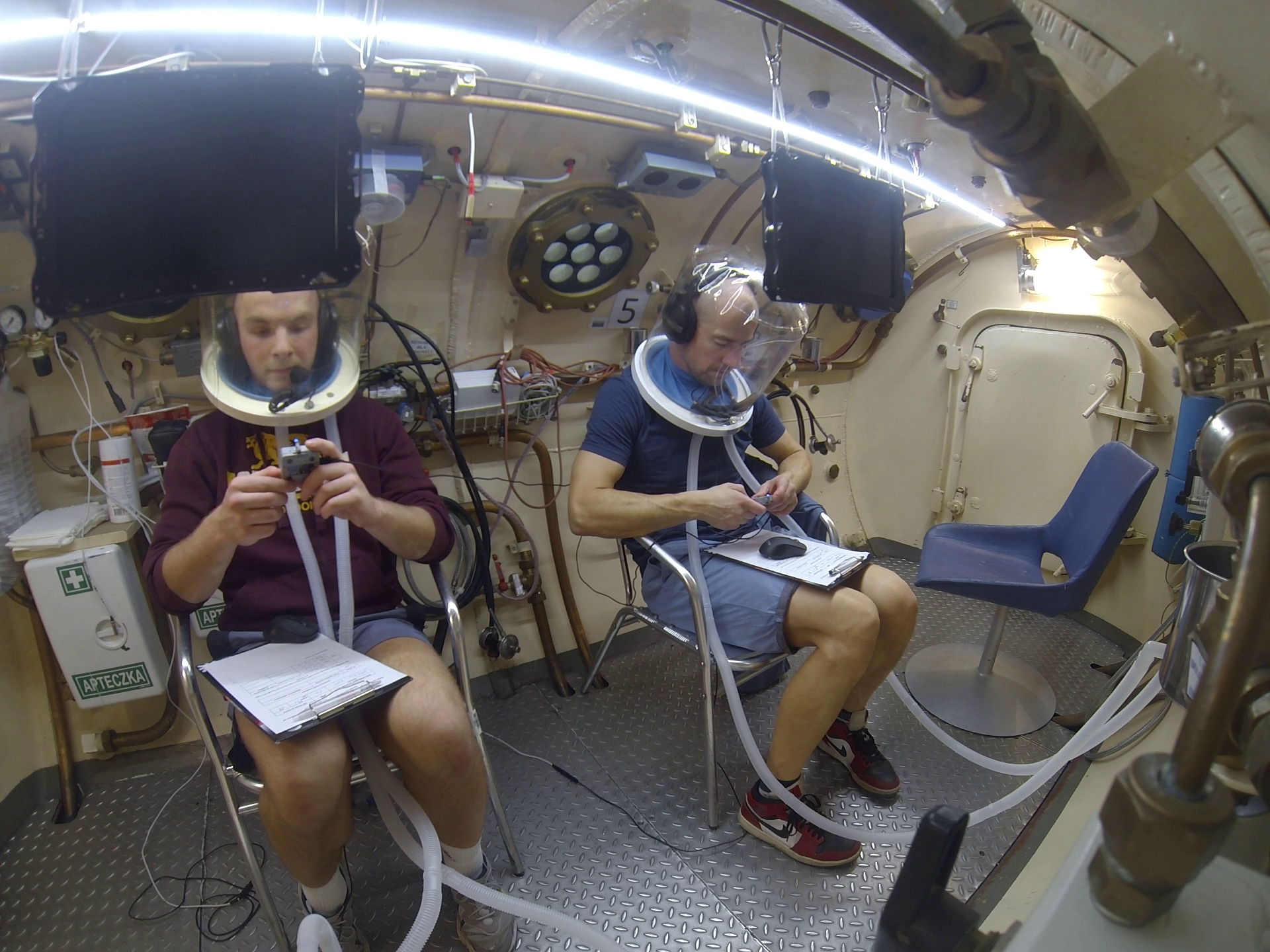
Particular attention will be given to the prevention, diagnosis and treatment of decompression sickness during lunar and planetary missions, as well as to the development of technologies enabling early detection of DCS symptoms during EVA. The experts will also work on screening procedures for Patent Foramen Ovale (PFO) and on adapting pre-breathe procedures and treatment protocols to the conditions of exploration missions.
The team includes specialists from Poland, Belgium, France, the Netherlands, Czech Republic, Greece, Denmark, Switzerland, the United States and the United Kingdom, representing leading universities, research institutes, and centres of hyperbaric and aerospace medicine, including Leiden University Medical Center, King’s College London, Aarhus University Hospital, and TNO in cooperation with Eindhoven University of Technology.
The team’s activity is planned for a period of 24 months. During this time, the experts will coordinate research activities, organise workshops and consultations, and prepare joint research projects for ESA. One of the key expected outcomes will also be the establishment of a European scientific and technological cooperation network in the field of exploration medicine and astronaut safety during missions beyond low Earth orbit.


