

Zofia Kachlik, M.D. currently a resident physician at the Department of Adult Psychiatry of the University Clinical Centre, the Medical University of Gdańsk's teaching hospital, and Michał Walaszek, M.D. presented their research findings at the European College of Neuropsychopharmacology (ECNP) Congress in Munich. Both are involved in research activities at the Department of Adult Psychiatry.
At one of Europe's leading scientific events dedicated to neuropsychopharmacology, they presented two research posters examining the use of ketamine in the treatment of treatment-resistant depression.
Both studies focused on life engagement, a dimension of treatment response encompassing wellbeing, interest in everyday activities, the capacity to experience pleasure and social functioning. This perspective is particularly relevant to depression research, as it considers patients' experiences and needs, which are not always fully reflected in conventional depression symptom severity rating scales.
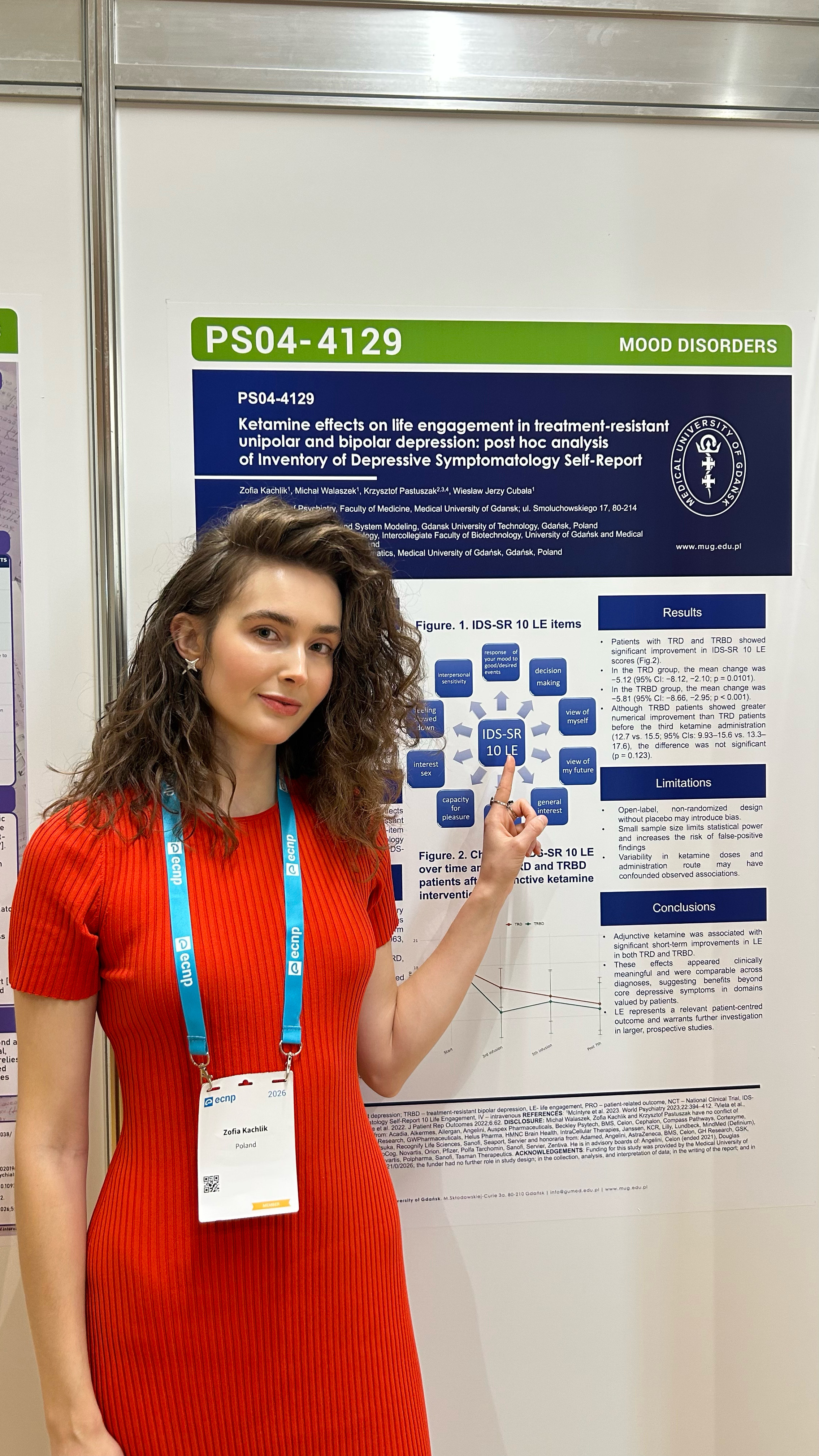
The first poster, entitled Ketamine effects on life engagement in treatment-resistant unipolar and bipolar depression: post hoc analysis of Inventory of Depressive Symptomatology Self-Report, presented an analysis of changes in life engagement among patients with treatment-resistant unipolar and bipolar depression. Significant improvements were observed in both groups during short-term adjunctive ketamine treatment. The findings support the inclusion of life engagement as an important patient-centred measure of treatment outcomes.
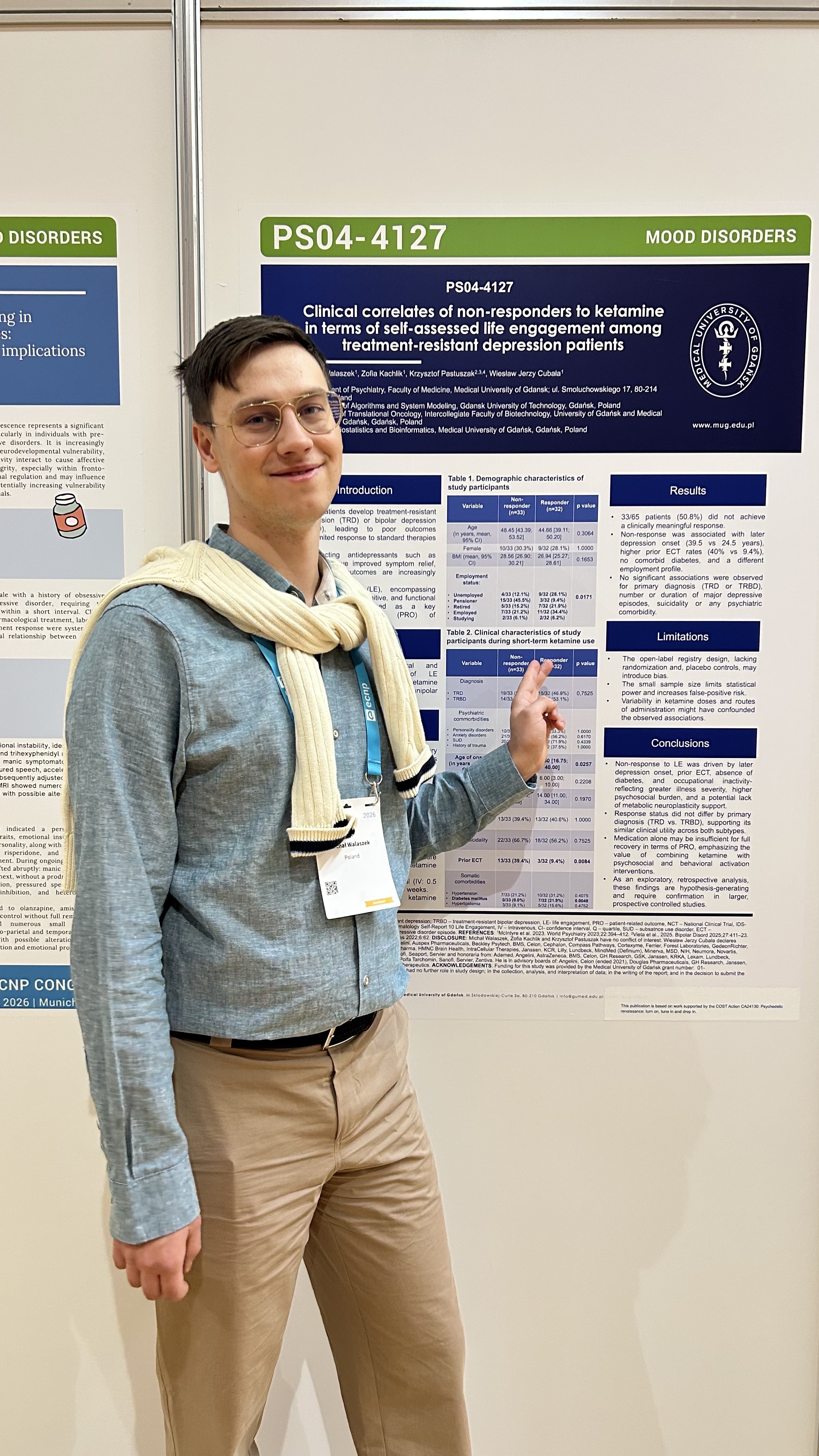
The second poster, Clinical correlates of non-responders to ketamine in terms of self-assessed life engagement among treatment-resistant depression patients, examined clinical and sociodemographic factors associated with a lack of improvement in self-reported life engagement following ketamine treatment. Half of the patients in the analysed cohort did not meet the predefined response criterion. Non-response was associated with several factors, including a later onset of depression, previous electroconvulsive therapy and unemployment. The authors emphasised that these findings are preliminary and require confirmation in further studies.
Another significant achievement was the publication of the findings from the second study in the Journal of Psychiatric Research.
The research was conducted under the supervision of Prof. Wiesław Jerzy Cubała, Head of the Department of Adult Psychiatry, in collaboration with Dr Krzysztof Pastuszak, Ph.D. from the MUG Centre for Biostatistics and Bioinformatics Analysis.
Participation in the ECNP Congress provided an opportunity to present the findings to the international scientific community and exchange knowledge and experience with researchers and clinicians working on contemporary approaches to the treatment of mood disorders.



