

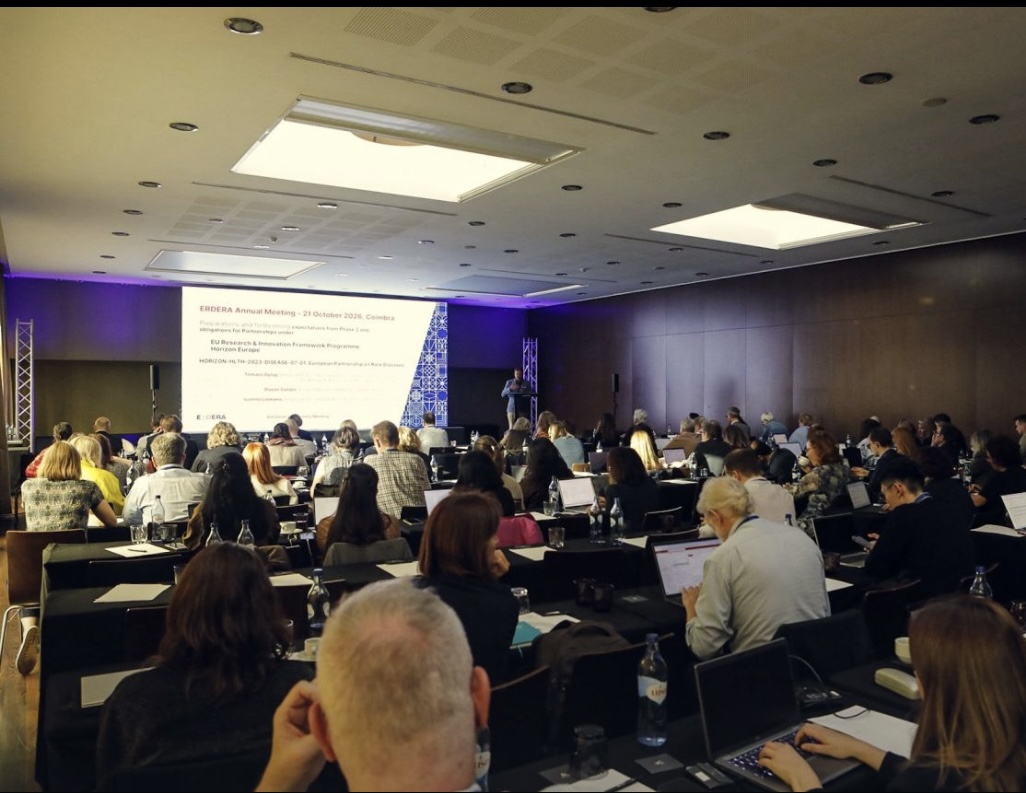
Advancing European scientific collaboration, educating future researchers and incorporating patients' perspectives into the setting of research priorities are among the areas in which the Medical University of Gdańsk is actively involved through the European Rare Diseases Research Alliance (ERDERA). Representatives of the University attended the partnership's third General Assembly, held in Coimbra, Portugal, from 21st to 23rd October 2026.
ERDERA is one of Europe's leading initiatives supporting research and innovation in the field of rare diseases. The partnership brings together scientific and clinical communities, public institutions, the private sector and patient organisations from dozens of countries. Its aim is to advance research that addresses the unmet needs of people living with rare diseases. The initiative is co-funded by the European Union under the Horizon Europe programme (Grant Agreement No. 101156595), alongside contributions from participating countries and public and private partners.
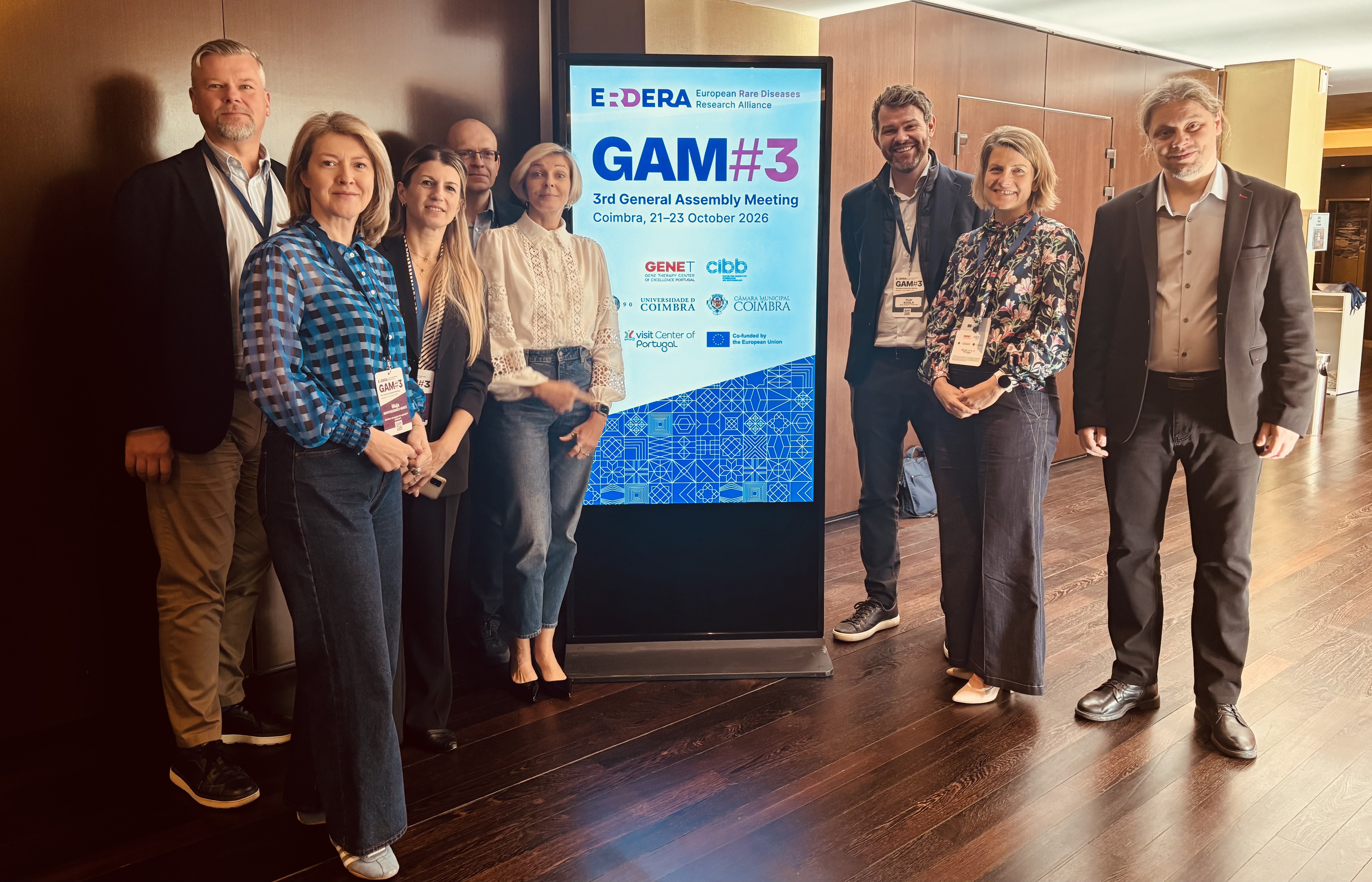
The Medical University of Gdańsk was represented at the General Assembly by Karolina Śledzińska, M.D., Ph.D. from the Department of Paediatrics, Haematology and Oncology, who leads the ERDERA project at the MUG, is an active member of the Rare Diseases Centre at the University Clinical Centre, MUG's hospital, and contributes to Task T20.4, European University Diploma in Rare Disease Research. She was joined by Maja Bartoszewicz-Moritz, also from the Department of Paediatrics, Haematology and Oncology, who coordinates the Patient Council at the Rare Diseases Centre and the secretariat supporting the development of the Polish National Mirror Group (NMG).
Tomasz Grybek, Ph.D. from the Department of Public Health and Social Medicine at the MUG is also involved in ERDERA, contributing to Task T20.4, European University Diploma in Rare Disease Research.
As part of Task T20.4, implemented under Work Package 20 (WP20), MUG is contributing to the development of the European University Diploma in Rare Disease Research, an inter-university educational programme dedicated to rare disease research. The initiative aims to establish a shared European educational pathway comprising interdisciplinary teaching modules, a European Credit Transfer and Accumulation System (ECTS) framework and academic collaboration between universities in different countries. The programme is intended to prepare future generations of researchers to conduct innovative studies that take account not only of biomedical perspectives but also of social, ethical and regulatory considerations, as well as patients' needs.
Another important area of MUG's involvement is Work Package 23 (WP23), which focuses on developing the Polish National Mirror Group. The University plays a leading role in establishing this group, which is intended to bring together scientific and clinical communities, public administration, research funding institutions and patient organisations, providing a platform for the exchange of knowledge and experience.
The Polish National Mirror Group will connect Poland's rare disease community with the wider European research ecosystem. Its responsibilities will include disseminating European achievements and good practices in Poland, while also communicating national experiences, identified needs and priorities to European partners. This will enable Poland's scientific and clinical communities to participate more actively in shaping European research agendas and system-level initiatives.
A fundamental principle of ERDERA is the involvement of patients and their representatives at every stage of the research process. Their role extends beyond benefiting from research outcomes. They are partners in identifying unmet needs, setting priorities, designing studies and assessing their relevance to health and quality of life.
This approach is also reflected in initiatives organised in Gdańsk. One example is the international event Undiagnosed Day 2026, held on 29–30 April and organised by the Medical University of Gdańsk, the University Clinical Centre, ERDERA and the Wilhelm Foundation. The event brought together clinical, scientific and patient perspectives, focusing on the challenges of diagnosing people whose conditions remain undiagnosed. Another important topic was the potential of international collaboration, data sharing and modern technologies to shorten the diagnostic pathway.
The third ERDERA General Assembly in Coimbra provided an opportunity to review the partnership's achievements to date, identify future priorities and strengthen international collaboration. MUG's involvement in ERDERA extends beyond participation in European projects: the University is actively helping to shape the future direction of research, education and innovation in the field of rare diseases. This collaboration combines the expertise of scientific and clinical communities with the experience of public institutions and patient organisations.
Its overarching objective remains to improve the lives of people living with rare diseases and their families. Ultimately, the value of research is determined not only by scientific discoveries and technological advances, but above all by their impact on diagnosis, care and the quality of life of patients and their loved ones.


