

The results of interdisciplinary research conducted with the participation of the team from the Department of Cardiac Disease Diagnostics at the MUG, headed by Prof. Marcin Hellmann, were presented during the most important cardiology events of 2026: the Congress of the European Society of Cardiology (ESC) in Munich and the 30th International Congress of the Polish Cardiac Society in Poznań. In both cases, the central element of the projects presented was the combination of modern clinical diagnostics with the assessment of microcirculation, endothelial biology, and cellular and metabolic mechanisms.
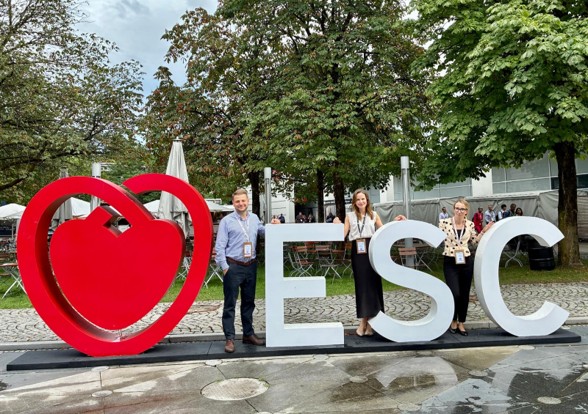
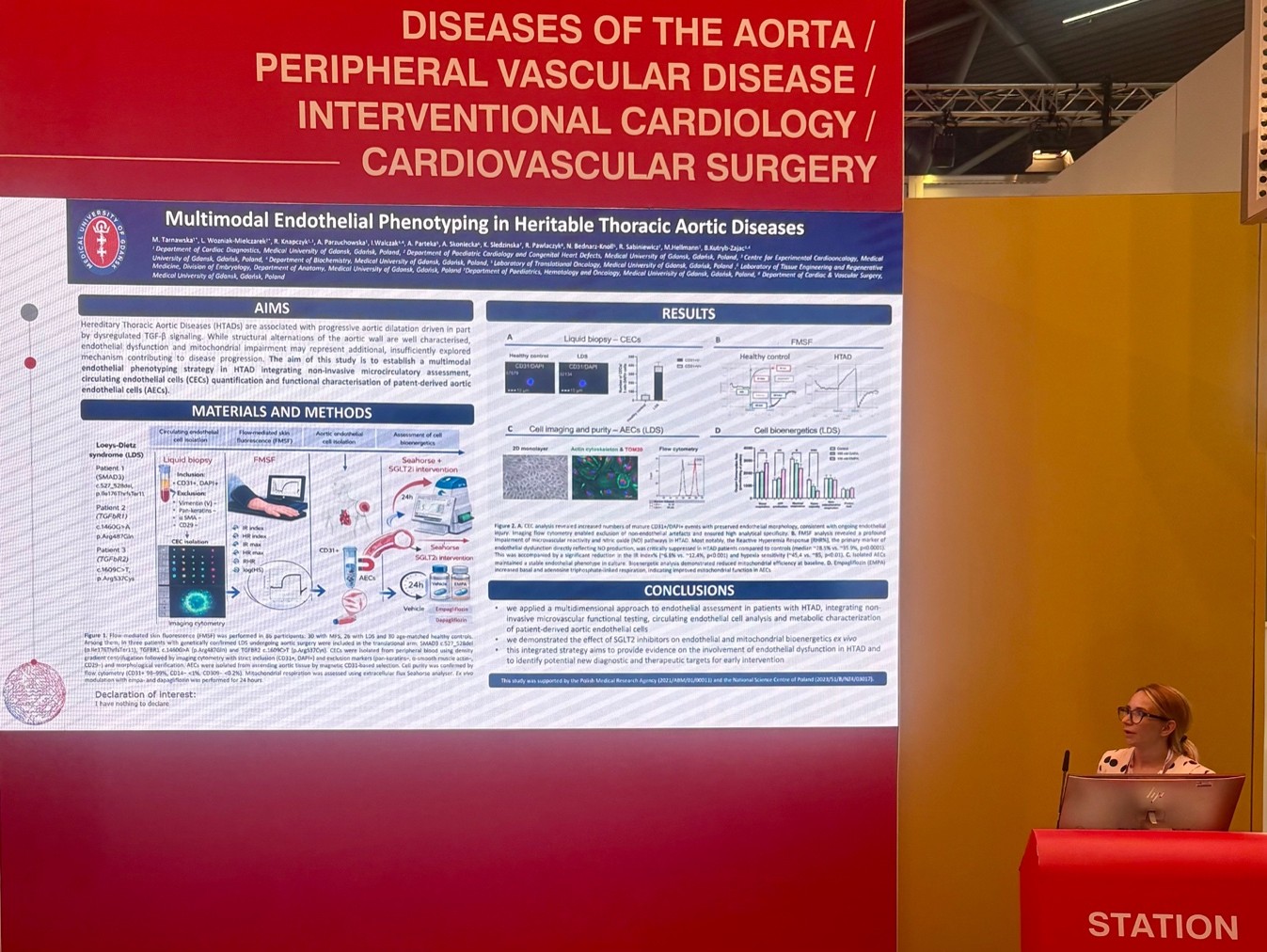
During the ESC Congress 2026 in Munich, Maria Tarnawska, M.D., Ph.D. from the Department of Cardiac Disease Diagnostics presented a paper entitled Multimodal Endothelial Phenotyping in Heritable Thoracic Aortic Diseases. She received a travel grant from the Polish Cardiac Society to present the project. The study integrated non-invasive assessment of microcirculation, analysis of circulating endothelial cells, and research on endothelial cells isolated from the aortas of patients with heritable thoracic aortic diseases.
The work was carried out as part of cooperation at MUG, and the project also involved researchers from the Department of Paediatric Cardiology and Congenital Heart Defects, the Department of Biochemistry, the Experimental Cardio-Oncology Centre, the Department of Translational Oncology, the Department of Embryology, and the Department of Cardiac and Vascular Surgery. The research was conducted under projects financed by the Medical Research Agency and the National Science Centre, with the participation of Dr Lidia Woźniak-Mielczarek from the Department of Paediatric Cardiology and Congenital Heart Defects at MUG, principal investigator of the Valsar-TAD (MARFAN) clinical study.
The ESC Congress was also attended by Prof. Barbara Kutryb-Zając, who represented the Board of the Experimental Cardiology Unit of the Polish Cardiac Society and, at the same time, as a researcher from the Department of Biochemistry at the MUG and coordinator of the Experimental Cardio-Oncology Centre, co-developed the experimental and translational arm of the presented projects.
Another example of this cooperation was a lecture delivered by Marcin Pajkowski, M.D., Ph.D. from the Department of Cardiac Disease Diagnostics at the MUG, entitled The Effect of a Dual GLP-1 and GIP Receptor Agonist on Microvascular Function: Vascular Mechanisms and a Clinical Perspective, during the 30th International Congress of the Polish Cardiac Society in Poznań. The lecture combined current clinical data on incretins with the results of the team’s own research into microvascular function. Particular attention was devoted to the effects of incretin-based therapies on small blood vessels and to the possibility of direct action on the vascular endothelium.
The presentation also showed data indicating that semaglutide and tirzepatide may modify the energy metabolism of endothelial cells by increasing glycolysis and altering parameters of mitochondrial respiration. The experimental research was conducted by Alicja Braczko, Ph.D. from the Department of Biochemistry at the MUG.
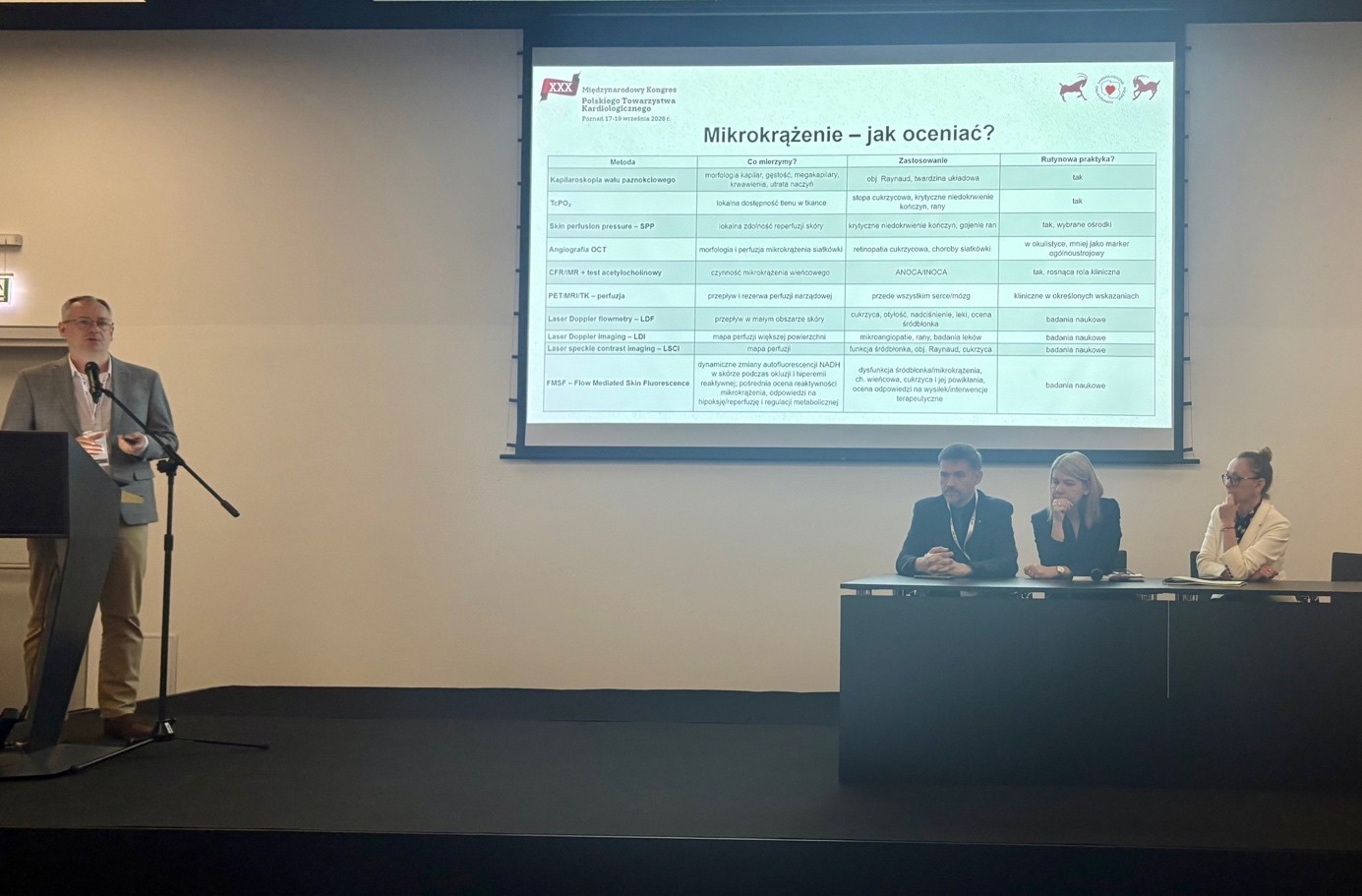
Both presentations demonstrate the model of translational cardiology being developed at the MUG, in which clinical observations and modern diagnostics are directly integrated with cellular, molecular and metabolic research. The development of this cooperation strengthens the MUG’s presence in the field of translational medicine and creates a platform for further projects concerning microcirculation, endothelial dysfunction, aortic diseases and the mechanisms of action of modern cardiometabolic therapies.


