

From October 15 to 17, 2026, researchers from the Medical University of Gdańsk (MUG) participated in the International Symposium on Mechanisms of Vasodilatation (MOVD 2026), held at the Research Institute of the McGill University Health Centre in Montreal, Canada. The symposium brought together international experts in vascular biology, endothelial dysfunction and microcirculatory abnormalities associated with cardiovascular diseases. The scientific programme featured three oral presentations and two posters from MUG research teams, highlighting interdisciplinary studies bridging basic science and clinical cardiology.
Prof. Barbara Kutryb-Zając from the Department of Biochemistry and Coordinator of the Centre of Experimental Cardiooncology presented findings from integrated metabolic analyses and microvascular function assessments in patients with chronic heart failure receiving sodium-glucose cotransporter 2 (SGLT2) inhibitors. The research is conducted in collaboration with Prof. Marcin Hellmann and Dr. Maria Tarnawska from the Department of Cardiac Diagnostics.
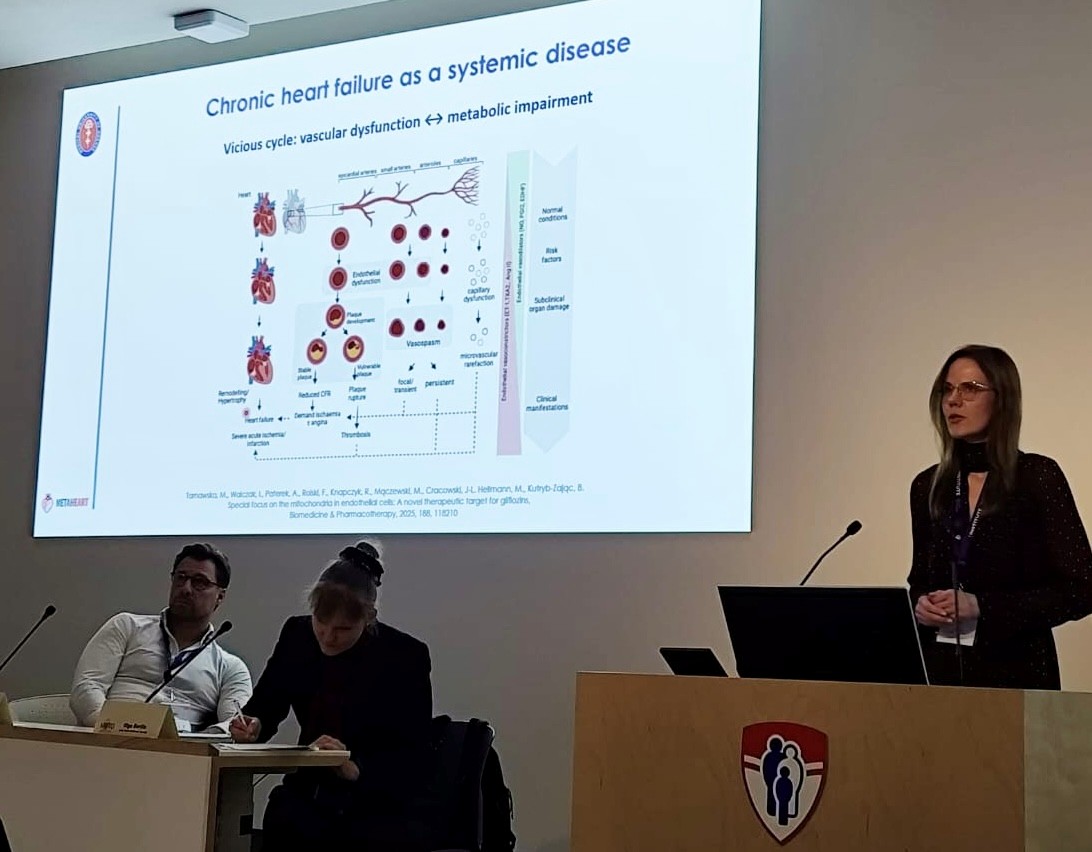
Roksana Knapczyk, MSc, a PhD student at the Department of Cardiac Diagnostics, presented findings from microvascular assessments and integrated proteomic and metabolomic analyses in patients with heritable thoracic aortic disease. The project is conducted in collaboration with Dr. Lidia Woźniak-Mielczarek from the Department of Paediatric Cardiology and Congenital Heart Defects, as well as national and international research partners, including the University of Zurich.
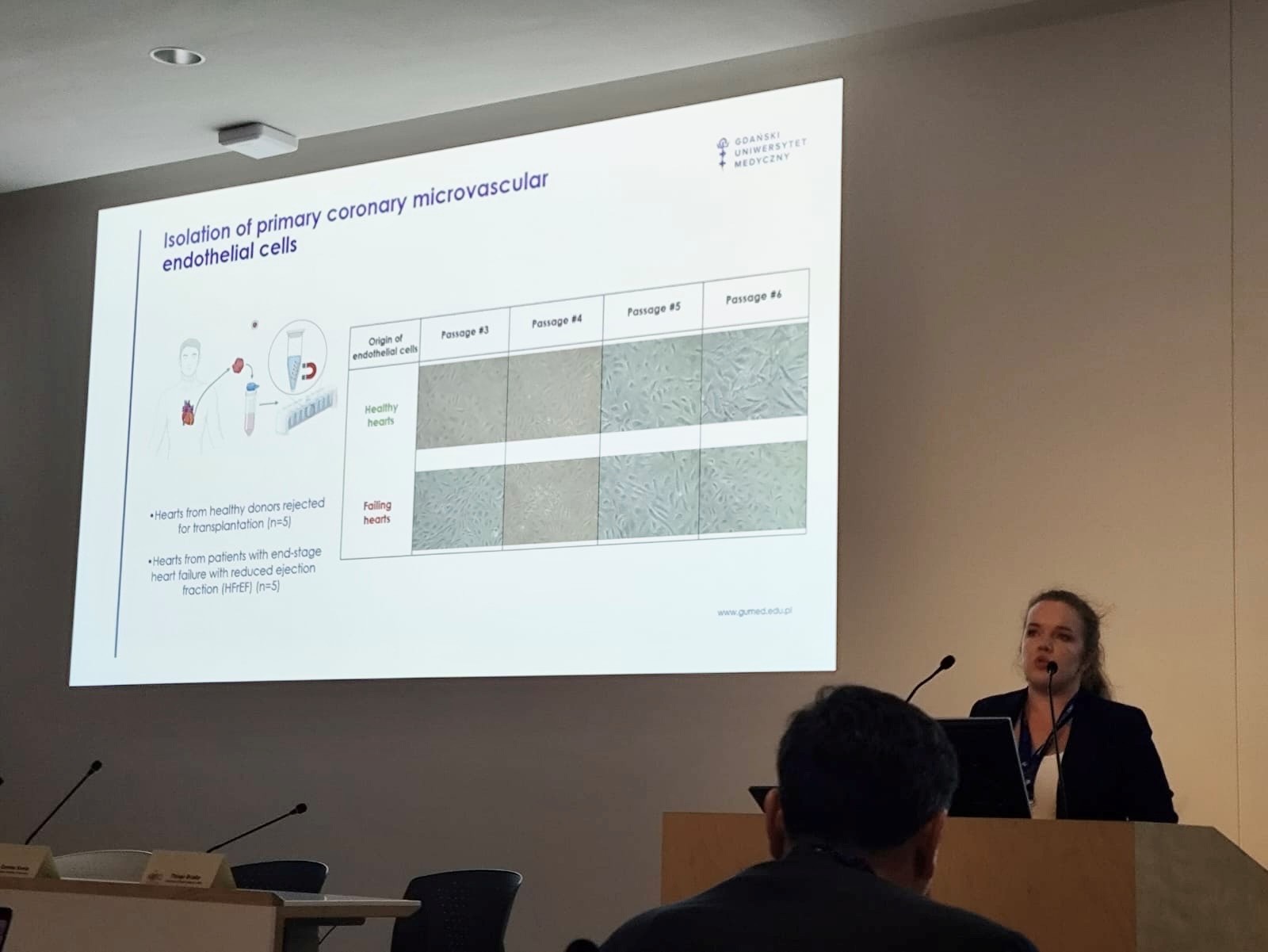
Iga Walczak, MSc, a PhD student at the Department of Biochemistry, presented research on mitochondrial dysfunction and metabolic remodelling in coronary microvascular endothelial cells isolated from human hearts obtained during heart transplantation procedures, including explanted failing hearts and non-failing donor hearts. The study is conducted within an OPUS research project led by Prof. Barbara Kutryb-Zając, in collaboration with the Cardinal Stefan Wyszyński National Institute of Cardiology and the Centre of Postgraduate Medical Education in Warsaw. Iga Walczak also presented a poster investigating endothelial dysfunction and metabolomic alterations preceding the functional progression of non-culprit coronary lesions following myocardial infarction. The research is conducted in collaboration with Dr. Grzegorz Żuk and Prof. Miłosz Jaguszewski from the Department of Cardiology at MUG.
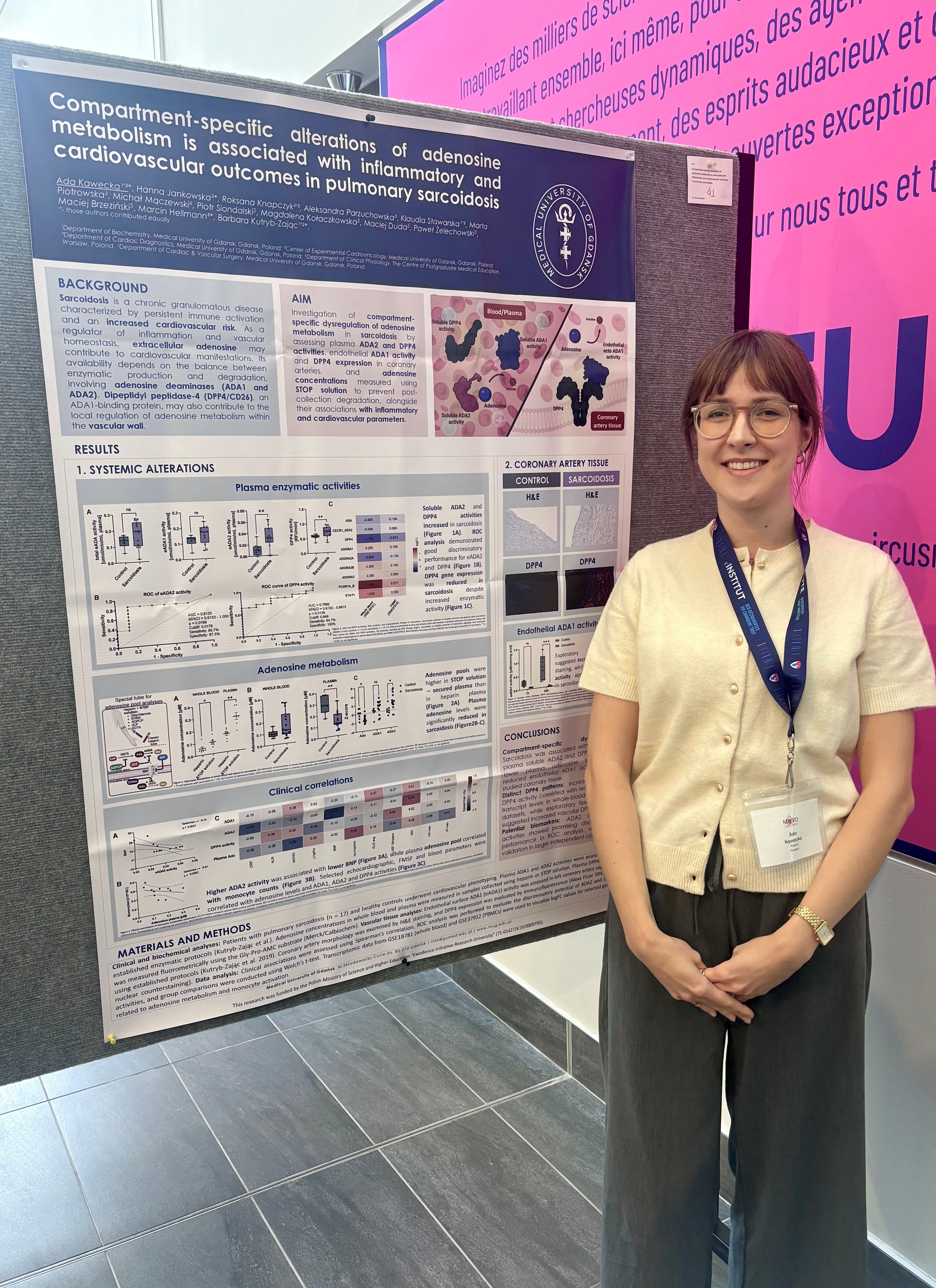
Ada Kawecka, MSc, a PhD student at the Department of Biochemistry, presented a poster on alterations in adenosine metabolism in pulmonary sarcoidosis. The research, conducted in collaboration with Dr. Hanna Jankowska from the Department of Cardiac Diagnostics and Assoc. Prof. Piotr Siondalski from the Department of Cardiac and Vascular Surgery, revealed changes in adenosine deaminase isoenzyme activities and adenosine concentrations, suggesting a potential role for this pathway in chronic inflammation and cardiovascular complications.
During the Vascular Development and Signaling session, co-chaired by Prof. Barbara Kutryb-Zając and Prof. Michele Castro from the University of São Paulo, Isabelly Annunciato from Jagiellonian University presented research on the adenosine-dependent effects of methotrexate on vascular endothelial function. In 2026, she completed two research visits at MUG under the supervision of Prof. Barbara Kutryb-Zając.
Participation in MOVD 2026 highlighted the importance of interdisciplinary collaboration between the Department of Biochemistry, Department of Cardiac Diagnostics, Department of Cardiology, Department of Cardiac and Vascular Surgery, Department of Paediatric Cardiology and Congenital Heart Defects and Centre for Experimental Cardiooncology at MUG. These collaborative efforts integrate clinical patient assessment with advanced molecular, metabolic and cellular investigations in cardiovascular medicine. A particularly important aspect of these activities is the longstanding collaboration with the research group led by Prof. Stefan Chłopicki, Director of the Jagiellonian Centre for Experimental Therapeutics (JCET) at Jagiellonian University. Prof. Chłopicki's scientific work continues the tradition of the Kraków School of Vascular Endothelial Pharmacology established by Prof. Ryszard Gryglewski, co-discoverer of prostacyclin and a pioneer in the investigation of endothelium-dependent mechanisms regulating vascular tone.
The collaboration between research teams in Gdańsk and Kraków builds upon this scientific tradition by integrating experimental pharmacology, biochemistry and clinical research to investigate novel mechanisms of endothelial dysfunction and their potential therapeutic modulation. The foundations of this collaboration date back to Prof. Barbara Kutryb-Zając's doctoral research, part of which was conducted at JCET in cooperation with Prof. Chłopicki's research group. One of the key achievements of these studies was the demonstration of markedly increased vascular ecto-adenosine deaminase (eADA) activity in atherosclerosis and the potential therapeutic benefits of its inhibition. The findings were published in Cardiovascular Research in 2016 (Link: https://doi.org/10.1093/cvr/cvw203). Subsequent studies by the team demonstrated the role of eADA in endothelial inflammatory activation, providing further evidence for the importance of extracellular adenosine metabolism in vascular function.
The history of MOVD dates back to the late 1970s. The symposium is closely associated with the development of modern vascular physiology and landmark discoveries that transformed our understanding of the endothelium from a passive vascular lining into an active organ regulating vascular tone, blood flow and thrombotic processes. Prof. Ryszard Gryglewski made a fundamental contribution to this field. In 1976, together with Salvador Moncada, Stuart Bunting and John Vane, he participated in the discovery of prostacyclin, a key endothelial mediator with vasodilatory and antiplatelet properties. His subsequent research demonstrating the inactivation of endothelium-derived relaxing factor (EDRF) by superoxide anions made an important contribution to understanding the mechanisms underlying the identification of EDRF as nitric oxide. In recognition of discoveries concerning nitric oxide as a signalling molecule in the cardiovascular system, the1998 Nobel Prize in Physiology or Medicine was awarded to Robert F. Furchgott, Louis J. Ignarro, and Ferid Murad. The legacy of these discoveries remains an integral part of MOVD, reflected in named lectures honouring distinguished pioneers of vascular physiology. Contemporary research presented at MOVD 2026, including projects conducted by MUG scientists in collaboration with JCET, continues this scientific tradition by exploring the molecular and metabolic mechanisms of endothelial dysfunction and their contribution to cardiovascular disease.
Another example of the importance of this research was the scientific symposium entitled Vascular Endothelial Medicine, organised at MUG in 2026 by Prof. Marcin Hellmann and Prof. Barbara Kutryb-Zając. The event brought together leading experts, including Prof. Jean-Luc Cracowski, a distinguished cardiologist and pharmacologist from the University of Grenoble and Prof. Stefan Chłopicki from Jagiellonian University.
Read more about the Vascular Endothelial Medicine symposium: https://gumed.edu.pl/en/news/science/meeting-vascular-endothelial-medicine-experts-mug.


