

Specialists from the Medical University of Gdańsk and the University Clinical Centre, the MUG hospital, have performed a truly exceptional mechanical thrombectomy in a 16-day-old newborn. The procedure is remarkable not only on a national scale, but also internationally, as it is rarely performed in very young children. Requiring extraordinary precision, it was the only chance to save the child’s health and life, the specialists emphasise.
Mechanical thrombectomy is a minimally invasive procedure involving the removal of a thrombus obstructing a blood vessel. It is most commonly performed in adults in the treatment of acute ischaemic stroke, restoring blood flow and minimising permanent tissue damage. In the youngest patients, anticoagulant therapy is the standard approach; however, in this case it could not be used.
Leon was born in December 2025 as a premature infant at 35 weeks of gestation. In the first days of life, he was diagnosed with thrombosis of the right renal vein. The thrombus began to extend into the inferior vena cava and towards the second, healthy kidney, creating an immediate risk of complete renal failure and the need for dialysis. An additional challenge was concomitant intracranial bleeding, which made it impossible to initiate anticoagulant therapy.
The problem progressed rapidly: the thrombus began to extend into the inferior vena cava and towards the second, healthy kidney. The situation was extremely dangerous, as it posed a risk of complete renal failure and the need for dialysis. A further complication was the intracranial bleeding that occurred in the child. For this reason, the doctors were initially unable to use standard anticoagulant therapy, explains Julia Radoń-Proskura, M.D., Ph.D. from the Department of Paediatrics, Haematology & Oncology at the MUG, the physician responsible for Leon’s care.
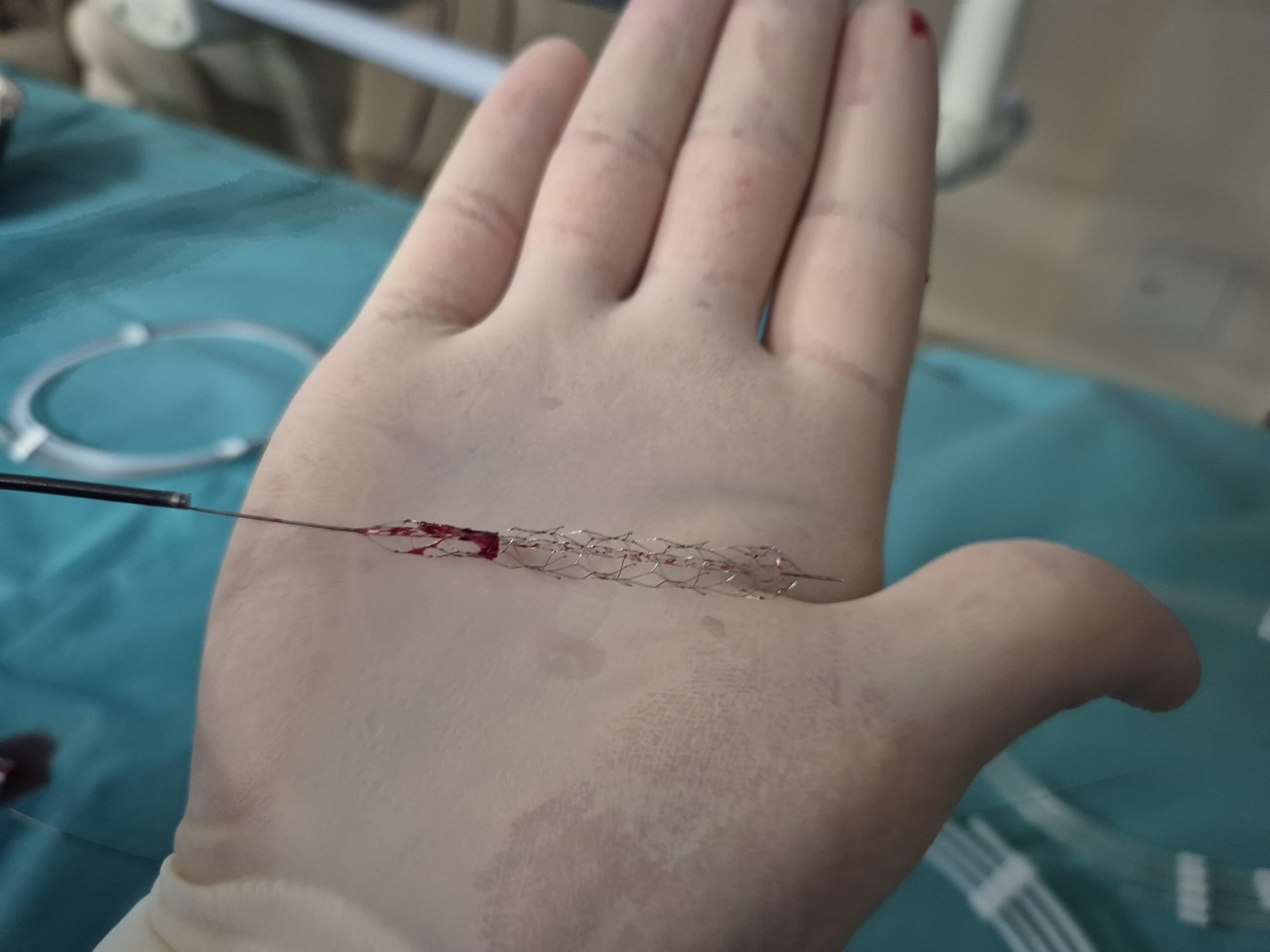
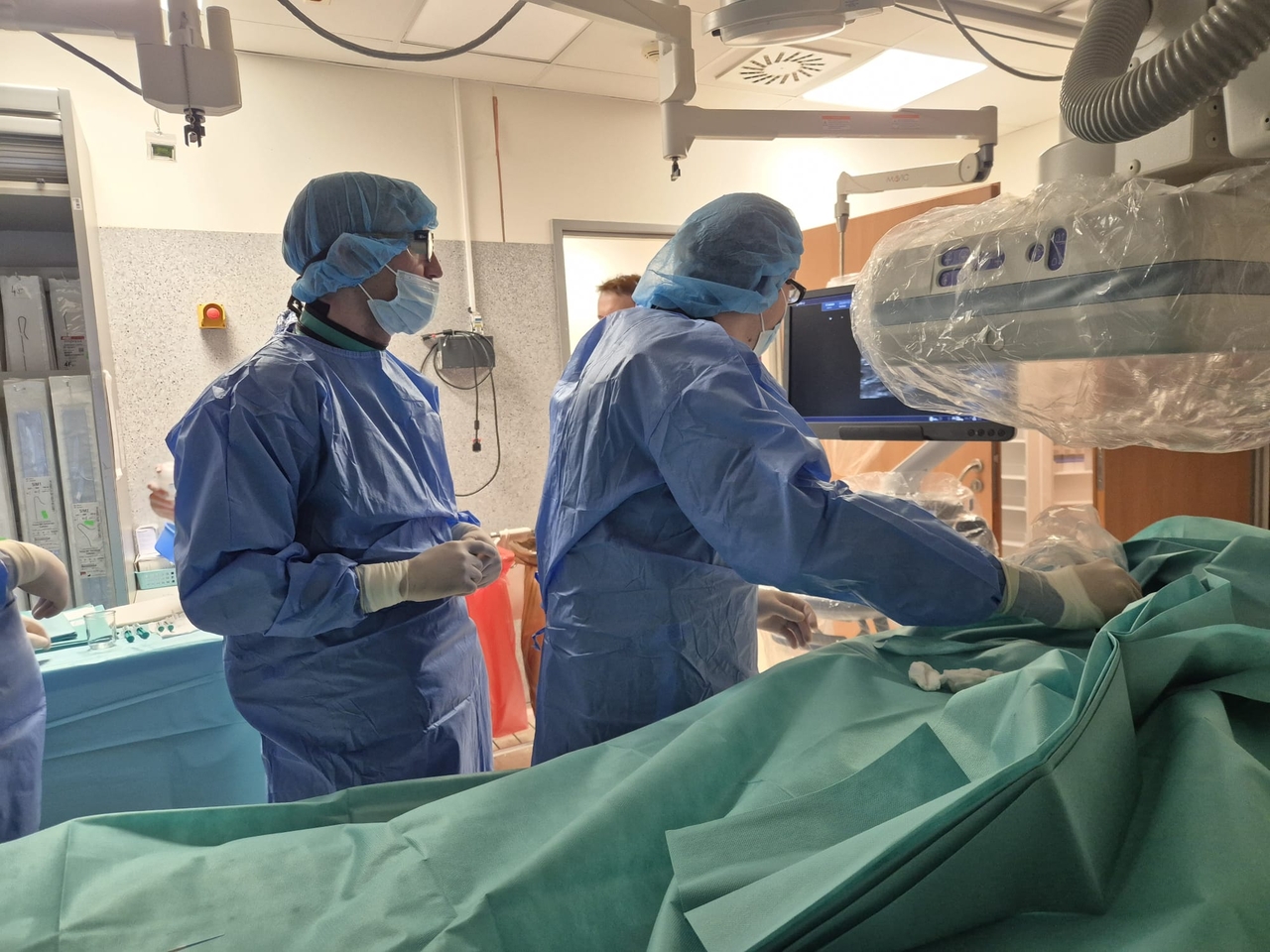
In view of the increasing threat to the child’s life, a multidisciplinary team of specialists from the MUG and the UCC decided to perform mechanical thrombectomy. The procedure was carried out on 13thJanuary 2026, when Leon was just 16 days old and weighed approximately 3.5 kg.
The procedure was technically challenging primarily because of the patient’s age and size. In a newborn, the blood vessels are very small, which means that every manoeuvre must be performed with the utmost precision and with the use of appropriately selected, delicate equipment. Another challenge is the small circulating blood volume: even minor blood loss, which would be clinically insignificant in an adult, may have serious clinical consequences in a child of this age. Our priority was to perform the procedure in the least invasive way possible while ensuring maximum safety for the child, emphasises Bartosz Regent, M.D., Ph.D. from the Department of Radiology at the UCC, who performed the mechanical thrombectomy together with Michał Magnus, M.D., Ph.D.
The procedure was successful. The physicians were able to remove the thrombi and halt the progression of the disease, thereby preserving the function of the child’s second kidney. Following the procedure, it became possible to introduce anticoagulant therapy. Leon remained under close specialist supervision for the following weeks and was subsequently discharged home in good condition. He is now six months old and remains under medical care.

As specialists from the University Clinical Centre, the MUG hospital, emphasise, in this situation standard treatment could not be applied. Mechanical thrombectomy was the only chance to save the child’s health and life. The case demonstrates the critical importance of rapid diagnosis and close cooperation between specialists from multiple fields of medicine.
The procedure also represents an important step in the development of paediatric medicine. Such advanced procedures are performed extremely rarely in newborns, and the experience gained may in the future contribute to more effective treatment of similar, highly complex cases in the youngest patients.
The treatment of Leon involved Magdalena Jędruszczak-Marko, M.D., Ph.D. from the Department of Neonatology, headed by Iwona Domżalska-Popadiuk, M.D., Ph.D.; Michał Maternik, M.D., Ph.D., D.Sc. from the Department of Paediatrics, Nephrology & Hypertension, headed by Ilona Zagożdżon, M.D., Ph.D.; Julia Radoń-Proskura, M.D., Ph.D. from the Department of Paediatrics, Haematology & Oncology, headed by Ninela Irga-Jaworska, M.D., Ph.D., D.Sc.; and Dr Angelika Brzozowska, M.D., Ph.D., from the Department of Radiology, headed by Prof. Edyta Szurowska.
The procedure was performed with the participation of interventional radiologists Bartosz Regent, M.D., Ph.D. and Michał Magnus, M.D., Ph.D.; Marta Mączka, M.D., from the Department of Anaesthesiology & Intensive Therapy at the UCC, the MUG hospital; anaesthesia and intensive care nursing specialist Agnieszka Sielicka; the nursing team comprising Agnieszka Zaborowska and Paulina Wawrzyńczak; and radiographer Łukasz Haber from the 2nd Department of Radiology.


