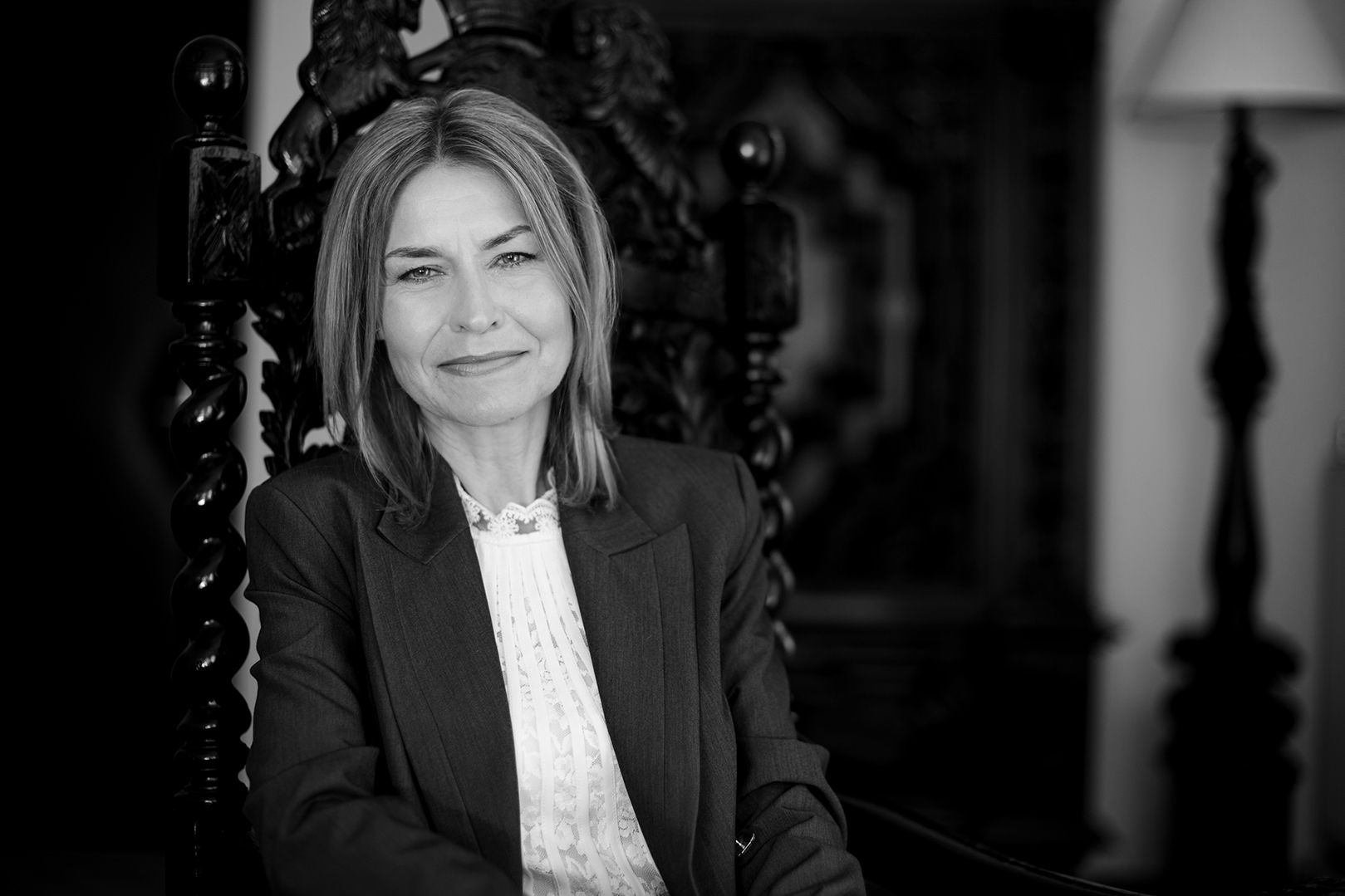
It is with our profound sorrow that we announce that on 26th January 2026, Prof. Magdalena Prokopowicz, Dean of the Faculty of Pharmacy at the Medical University of Gdańsk, has passed away. She was a highly esteemed scientist, an academic teacher of many generations of students of the Faculty of Pharmacy, and the author of numerous scientific publications.
Prof. Magdalena Prokopowicz, Pharm.D., was an academic teacher and professor of medical and health sciences in the discipline of pharmaceutical sciences. In the years 2020-2024, she served as Vice-dean for Education of the Faculty of Pharmacy, and from 2024 she held the position of the Dean of the Faculty of Pharmacy.
She obtained the degree of Master of Science in Biotechnology Engineering in 1994 from the Faculty of Chemistry at the Gdańsk University of Technology. In 1995, she commenced doctoral studies at the Department of Analytical Chemistry at the Gdańsk University of Technology under the supervision of the late Prof. Jacek Namieśnik, Honorary Doctor of the Medical University of Gdańsk. She defendedwith honors her doctoral dissertation entitled Gas standard mixtures prepared on the basis of thermal decomposition of surface compounds, obtaining the degree of Doctor of Chemical Sciences. The most significant tangible scientific achievement of this research period was granting of a patent entitled A composition for preparing a liquid standard mixture, especially for the calibration of Analytical Instruments, No. 194181, B1 (31st May 2007), Gdańsk University of Technology.
In 1999, she began her professional career at the Department of Physical Chemistry at the Medical Academy in Gdańsk. In 2012, she was awarded the habilitation degree of the Doctor of Science of Pharmaceutical Sciences, based on the scientific achievement entitled Preparation and physicochemical characterization of silica xerogels as solid carriers of doxorubicin hydrochloride – an anticancer agent. On 1st December 2021, she was appointed an Associate Professor, and from 3rd February 2023, she held the title of Professor of Medical and Health Sciences in the discipline of Pharmaceutical Sciences.
She continued her scientific research on bioactive silica gel composites in collaboration with scientists from the SFI Research Centre for Pharmaceuticals at the University of Limerick (Ireland), where she completed a scientific fellowship as a Visiting Scientist. Her work on silica gels resulted in another patent in 2020 entitled A pharmaceutical composition for bone tissue implantation, a method for its preparation, and its use in the manufacture of an implant for the treatment of bone tissue, No. 241688 (29th May), Medical University of Gdańsk. She successfully obtained research funding from external sources – she was the principal investigator, key researcher, and scientific supervisor of seven externally funded research projects (KBN, NCN). She passed on her passion for science to subsequent generations –she supervised 3 completed doctoral dissertations and over 20 master's theses.
Alongside her research work, she was deeply committed to serving the academic community and improving the quality of education. In cooperation with the Convention of Deans of Pharmaceutical Faculties, she participated in the development of a new standard of education preparing students for the profession of pharmacist. She was a member of numerous university and faculty committees. She participated in the development of the University System for Quality Assurance in Education at the Medical University of Gdańsk. She paid particular attention to students, initiating, inspiring, and supporting activities aimed at their scientific and professional development. She was a member of the Gdańsk Scientific Society and the Polish Pharmaceutical Society. For her scientific, teaching, and organisational achievements, she was repeatedly honoured with Rector’s Awards.
Her passing is a profound loss to the academic community, her colleagues and her students.
Information on the book of condolences and funeral ceremonies
A book of condolences has been made available in the Rectorate building, on the second floor, next to the Rector’s Office. Entries may be made until 29th January 2026 (Thursday), 2:00 p.m. The Rectorate is open from 7:00 a.m. to 3:30 p.m. On 30th January 2026 (Friday), the Book of condolences will be made available at the Faculty of Pharmacy.
The funeral ceremonies will take place on 31st January 2026 (Saturday). At 12:00 noon, a holy mass will be celebrated at the Church of St. Adalbert (Trakt św. Wojciecha, Gdańsk–Święty Wojciech). The burial service will follow immediately after the mass at the parish cemetery. The holy mass will be preceded by the rosary at 11:30 a.m.
Friday, 30th January, has been declared a day of mourning at the Faculty of Pharmacy. At 8:30 a.m., a Holy Mass will be celebrated at the church of St. Andrew Bobola, located at A. Mickiewicza 11 street, in Gdańsk–Wrzeszcz (the main church).